
How art transforms city tours into immersive experiences

Public art does something most travelers never expect: it changes cities from the ground up. Research shows that Philadelphia’s 4,000+ murals reduced daytime crime by 42% and nighttime property crime by 40% in surrounding areas, with effects lasting up to seven years. That’s not a gallery statistic. That’s a city being physically transformed by creativity. In this article, we’ll walk you through how art shapes the modern city tour experience, what types of art-driven tours exist across the globe, the real economic and cultural benefits they generate, the pitfalls to watch for, and where technology is taking it all next.
Table of Contents
Key Takeaways
Point | Details |
Art deepens urban discovery | City tours with art guides reveal hidden stories and foster unique travel experiences beyond famous landmarks. |
Economic and safety boosts | Murals and public artworks increase property values, reduce crime, and draw quality tourism to overlooked neighborhoods. |
Authenticity requires mindfulness | Seek community-led or off-season art tours to avoid commercialization and help sustain local culture. |
Technology expands art access | Augmented reality and interactive tours deliver immersive art encounters to a wider audience. |
How art transforms the city tour experience
Art isn’t decoration. It’s a language. And when you learn to read it, a city reveals an entirely different version of itself.
Public art walking tours in cities like San Antonio’s Zona Cultural and Minneapolis weave art into daily urban life, guided by experts who know the stories behind each piece. These aren’t your standard sightseeing routes. They’re conversations between the visitor, the art, and the city itself. You end up standing in a neighborhood you might never have entered otherwise, looking at something that makes you feel both small and deeply connected.
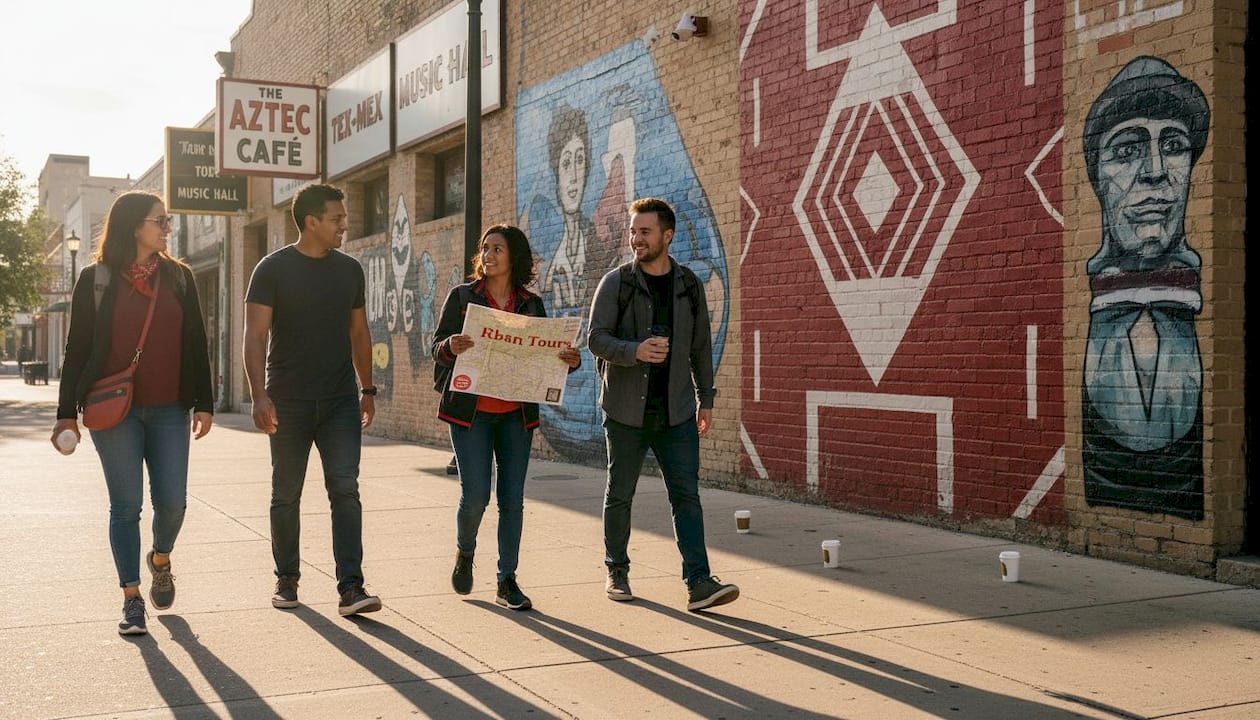
Barcelona is one of the most vivid examples of this. The city’s Barcelona street art scene is layered, political, playful, and sometimes breathtaking. Exploring it with the right guide means you’re not just looking at paint on a wall. You’re understanding decades of cultural tension, celebration, and identity. We’ve seen travelers leave a two-hour street art tour more moved than after a full day in a major museum. That says everything.
Here’s what makes art-focused tours stand apart from conventional city walks:
Murals and public installations tell neighborhood stories that no guidebook captures
Expert guides decode symbolism, history, and community meaning behind each work
Art tours reveal secondary and tertiary neighborhoods far beyond the typical tourist trail
The experience is participatory, inviting reflection and personal interpretation
You meet the city at street level, at a human and emotional scale
“Art is not what you see, but what you make others see.” — Edgar Degas
Pro Tip: Look specifically for tours that offer access to working artists or local historians. These guides bring a depth of context that turns a walk into something that genuinely stays with you long after you’ve returned home.
City | Art tour format | Key experience |
San Antonio | Cultural walking tours | Zona Cultural murals and civic history |
Minneapolis | Bike and walking tours | Public sculpture and neighborhood art |
Barcelona | Street art and design tours | Layers of political and contemporary art |
Mexico City | Guided mural and studio visits | Muralism, identity, and living artists |
If you’re curious about the unique Barcelona art tours available to creative travelers, you’ll find that the city rewards exploration far beyond the Picasso Museum.
Types of art-focused city tours around the world
With a sense of art’s positive impact, you may ask: what exactly is available to you as a traveler? The range is wider than most people realize, and each format offers a genuinely different kind of access to a city’s creative soul.
Here are the main types of art-driven city tours you’ll find across global destinations:
Classic art and architecture walking tours focus on historic buildings, civic sculpture, and museum districts. Think Venice’s Renaissance walking routes where expert historians guide visitors through Titian and Tintoretto. Or Barcelona’s Gaudí sites, where architecture and art blur into something altogether extraordinary.
Museum and gallery-focused routes take you through curated collections with deeper cultural context than solo visits allow. These work especially well in cities like Tokyo, Paris, or Florence, where a knowledgeable guide transforms a gallery visit from passive viewing into active discovery.
Open-air street art tours are the most democratic and dynamic format. These tours require no ticket, no reservation beyond the tour itself, and they exist in the living, breathing streets of cities like Barcelona, Mexico City, and Bogotá.
Technology-enabled AR and VR experiences are a newer and growing format. Using augmented reality overlays on smartphones or wearable devices, travelers can see historical layers of a city’s artistic past superimposed over the present. Some tours use AR to reveal what a mural looked like before it was painted over, or to animate static sculptures.
Workshop-integrated tours combine viewing with creating. Think Paint & Sip evenings, ceramics classes with local artists, or textile workshops where you learn a traditional craft within the city’s cultural context.
Pro Tip: The richest travel experiences often come from mixing two tour types in a single city. Pair a street art walk in the morning with a gallery tour in the afternoon. The contrast tells a fuller story.
Tour type | Best for | Budget level | Accessibility |
Walking art and architecture | History and design lovers | Low to mid | High |
Museum and gallery routes | Deep cultural learners | Mid to high | Moderate |
Open-air street art tours | All ages and travelers | Low | Very high |
AR-enhanced experiences | Tech-forward explorers | Mid | Moderate |
Workshop-integrated tours | Creative and hands-on travelers | Mid to high | Moderate |
Whether you’re drawn to the ancient or the contemporary, there’s an art tour shaped exactly for your curiosity. Explore Barcelona cultural tours, CDMX art experiences, and Japan art explorations for some of the most inspiring options we offer.
Benefits of art in city tours: cultural, economic, and community impact
Understanding the options is only part of the story. Let’s see what art tours actually contribute to cities, and why those contributions matter to you as a traveler.
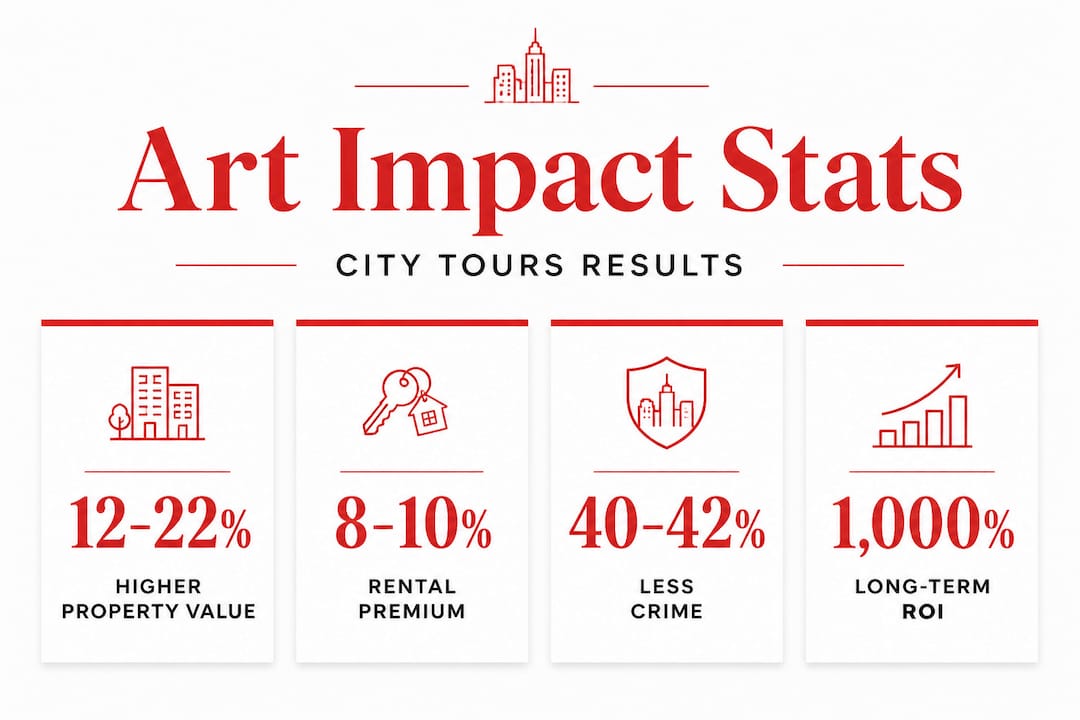
The economics alone are striking. Street art murals boost property values by 12 to 22%, generate rental premiums of 8 to 15%, increase foot traffic by 23%, and deliver an ROI of up to 1,177% over five years, according to an Urban Land Institute study. That’s not an art argument. That’s a business case.
For the traveler, the value is equally tangible. Cultural tourists spend 38% more and stay 22% longer than the average visitor. Cities like Barcelona are actively banking on this, using art exhibitions to attract quality-minded travelers rather than mass tourism. The city’s strategy isn’t just cultural. It’s intentional and economic.
Here’s what art-driven tourism delivers, broken down clearly:
Property and neighborhood revitalization through mural investment and creative placemaking
Tourism redistribution away from overcrowded centers toward emerging neighborhoods
Longer visitor stays and higher per-day spending compared to non-art-focused travel
Crime reduction in areas with significant public art installations
Cultural pride and community identity for local residents
Key numbers to know: Philadelphia murals reduced daytime crime by 42%. Barcelona’s art-led tourism strategy targets visitors who spend more and stay longer. Street art can return over 1,000% ROI in five years.
The connection between public art and safety is one of the most surprising findings in urban research. When neighborhoods feel cared for, when walls tell stories instead of standing gray and blank, something shifts in the community’s relationship with public space. That’s exactly what the lasting memories from local art are built from: places that feel alive and intentional.
For travelers, this means the neighborhoods you explore on a well-designed art tour are often safer, more vibrant, and more welcoming than you might expect. That’s an experience worth seeking.
Challenges and nuances: authenticity, commercialization, and sustainability
While art brings so much good to city tours, it’s vital to recognize the delicate balance. Not all art-focused tourism is created equal, and mindful travelers should know what to look for and what to avoid.
Barcelona’s Open Air Street Gallery is a powerful model for sustainable art tourism. By redirecting visitor traffic to less-central neighborhoods through community-led governance, the program preserves local identity and knowledge-sharing while easing pressure on overcrowded hotspots.
Not every city has managed this balance. In Wynwood, Miami, street art initially drove organic redevelopment. But commercialization gradually replaced grassroots murals with commissioned pieces for luxury brands, and the district transformed into a high-priced destination that many original community members can no longer afford. The art stayed. The authenticity didn’t.
Florence and other Italian art cities face a related problem: overtourism leading to commodification and a loss of genuine cultural experience. When every corner is a photo opportunity for social media rather than a moment of real engagement, the art loses its power to connect.
Here’s what to look for as a mindful art traveler:
Choose community-led or locally operated tours over large commercial operators
Visit non-central neighborhoods where art is still part of everyday life, not just performance
Travel off-peak or off-season to reduce your footprint and engage more meaningfully
Ask your guide who commissioned the art and what its community relationship is
Support tours that pay local artists directly or partner with neighborhood organizations
The goal is to be a traveler who adds something to a place, not just someone who consumes it. That distinction shapes everything.
The future of art in city tours: technology and evolving experiences
Beyond the current landscape, the question is: how will digital innovation shape the way we discover art in cities?
Augmented Reality is already changing the museum experience in measurable ways. AR-enhanced museum tours improve visitor satisfaction and intention to return by enhancing individuation, interactivity, authenticity, and aesthetics, based on structural equation modeling across 324 survey respondents. These aren’t marginal improvements. They represent a fundamental shift in how people engage with art.
Here’s what technology is bringing to art-driven city tours right now:
AR overlays on public murals that reveal the artist’s process, original sketches, or historical context through a phone screen
Personalized tour routes generated by AI based on your taste profile, previous experiences, and pace preferences
Virtual access to private collections and studio spaces that would otherwise be inaccessible
Interactive audio experiences that trigger location-based storytelling as you walk past specific artworks
Community-created content layers where local residents add their own stories and memories to public installations
These tools don’t replace human guides. They extend them. The best experiences we’ve seen combine local storytelling expertise with smart digital layers, creating something neither could achieve alone.
Pro Tip: When booking a tour, ask if AR features or interactive audio guides are included. The combination of lived local knowledge and immersive technology is where the most memorable art experiences are happening right now.
What most travelers miss about art in city tours
Here’s the honest truth: most travelers approach art in cities the way they approach a checklist. See the Sagrada Família. See the Louvre. Take the photo. Move on. We understand the impulse. Time is short and expectations are high.
But the most transformative travel moments we’ve witnessed never happen at the landmarks. They happen in a narrow street in a neighborhood you almost skipped, standing in front of a mural painted by someone whose name you’ll never find in a guidebook. That mural was made for the people who live there. And when you take the time to engage with it, you become, briefly and genuinely, part of that community.
The travelers who chase Instagram spots often return home with beautiful images and an oddly hollow feeling. The travelers who follow art as a lens for understanding, rather than a backdrop for photography, return with something harder to describe but much easier to hold onto. A story. A conversation. A sense of having actually been somewhere.
Art off the beaten path is not a consolation prize. It’s the whole point.
When you approach a city through its creative pulse rather than its monuments, you also leave something behind. Your presence in emerging neighborhoods, your spending in local cafes and shops near community murals, your curiosity in conversations with guides and artists: all of it feeds the ecosystem that keeps authentic city culture alive. That’s what making memories with authentic city art really means. It’s a reciprocal relationship between traveler and place.
Explore city art tours and make your next trip unforgettable
Art has the power to turn a city visit into something you carry with you for years. The stories are already there, painted on walls, carved into facades, spilling out of galleries and into the streets. All you need is the right guide to help you hear them.
[
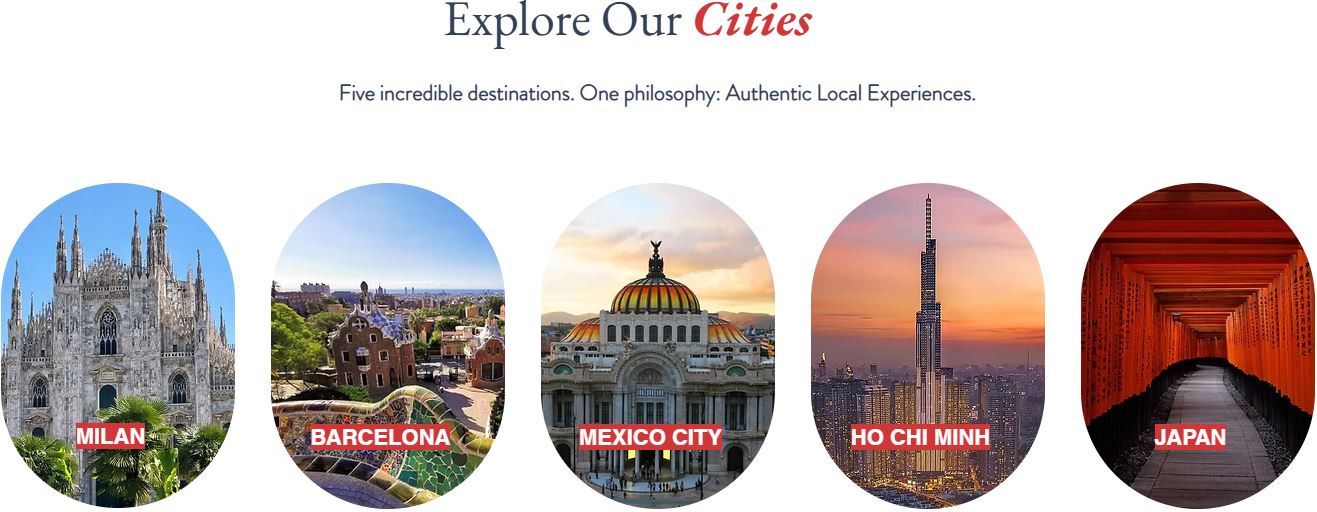
We design our experiences to do exactly that. Whether you’re exploring the vibrant textures of Barcelona art experiences, joining one of our walking cultural tours through neighborhoods most visitors never find, or discovering the quiet beauty of Japan art tours, every experience we create is built around authentic connection, local creativity, and the kind of moments that matter. Your next unforgettable city story starts here.
Frequently asked questions
How does public art affect traveler safety in cities?
Research shows that murals reduce crime by 40 to 42% in surrounding areas, improving how safe both residents and tourists feel in public spaces.
Do art tours increase the value of neighborhoods?
Yes. Street art murals boost property values by 12 to 22% and can generate an ROI of over 1,000% over five years, making art investment a powerful driver of neighborhood economic activity.
Are art-focused city tours appropriate for all age groups?
Absolutely. Options range from interactive open-air street art walks perfect for families to in-depth museum routes designed for adult learners and architecture enthusiasts, making art tours genuinely accessible across all ages and interests.
How does art tourism support local communities?
Community-led art tours redirect visitor traffic to underexplored neighborhoods, supporting local businesses, artists, and cultural organizations while reducing pressure on already-crowded city centers.
What new trends are emerging in art city tours?
AR-enhanced guided experiences are transforming how visitors engage with art, adding interactivity, personalization, and deeper storytelling layers that make museum and street art tours significantly more immersive and satisfying.
Recommended
Comments