
How to experience Mexico City's culture like a local

Mexico City is one of the most layered, vibrant, and creatively alive cities on the planet. But too many travelers leave having only skimmed its surface, snapping photos at the Zócalo and moving on before the city’s real rhythm even begins to reveal itself. The difference between a forgettable trip and a truly transformative one comes down to intention. This guide will show you how to plan, participate, and reflect your way into Mexico City’s authentic pulse, from neighborhood life and daily rituals to hands-on experiences that connect you with the people who actually call this extraordinary city home.
Table of Contents
Key Takeaways
Point | Details |
Plan for depth | Balance landmarks with neighborhood time for meaningful immersion in Mexico City. |
Adapt to local rhythms | Embrace the city’s social timing, etiquette, and daily routines for authentic connections. |
Choose hands-on experiences | Participate in cooking, creative workshops, and neighborhood activities to truly engage with locals. |
Book ahead and stay flexible | Reserve key experiences in advance while leaving space for spontaneous discoveries. |
Value the unplanned | The most memorable moments often come from small, everyday interactions. |
What cultural immersion really means in Mexico City
Now that you’re motivated to go deeper, it’s important to understand what “immersion” truly looks like in practice.
Most travelers arrive with a mental checklist: Teotihuacán, Frida Kahlo’s Casa Azul, a taco from a street cart, maybe a mezcal bar. These are all genuinely worthwhile. But ticking them off quickly and moving on is the opposite of immersion. It’s consumption without connection.
True cultural immersion means slowing down enough to notice the details. It means sitting in a neighborhood café long enough to hear how people actually talk to each other. It means wandering the streets of Roma Norte or Coyoacán without a destination in mind, letting the city’s creative energy pull you somewhere unexpected.
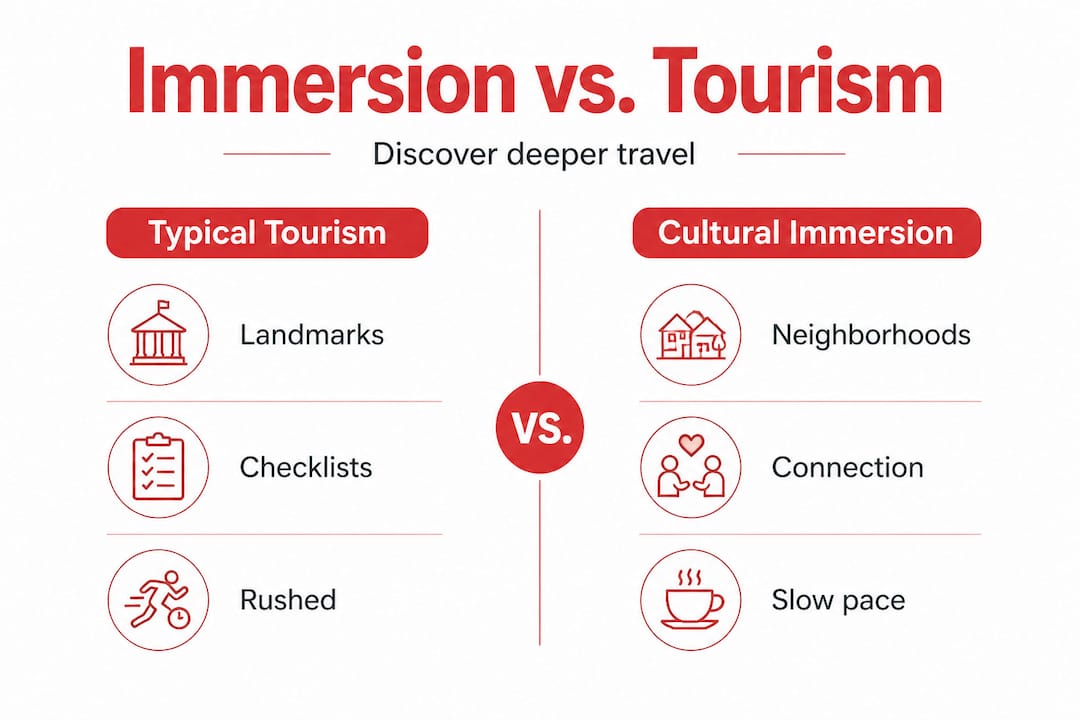
Here’s a simple way to think about the difference:
Typical tourism | Cultural immersion |
Major landmarks only | Landmarks plus neighborhood time |
Rushed, checklist-driven | Slow, curiosity-driven |
Passive observation | Active participation |
Guided bus tours | Walking, local markets, workshops |
2 to 3 days | 5 or more days |
Eating at tourist-facing restaurants | Eating where locals eat |
As Fodor’s recommends, avoiding a “checklist-only” approach means balancing big attractions with genuine neighborhood time and longer trips. The major sites give you context. The neighborhoods give you the soul.
Local-first travel experts agree: use landmarks as context and focus most of your energy on neighborhood life, where the real texture of Mexico City lives.
What does that look like in practice? It means building in unscheduled time. It means choosing one neighborhood and staying there long enough to recognize the faces at the corner tienda. It means reading our local insider guide before you arrive so you already know which streets hum with creative life.
The key elements of genuine immersion include:
Staying longer: At least five days, ideally a week or more
Going slower: One or two neighborhoods per day, not five
Choosing participation over observation: Cooking classes, markets, workshops
Talking to people: Shopkeepers, artists, café owners, neighbors
Returning to the same places: Familiarity builds real connection
Essential etiquette: Daily rhythms and interacting like a local
Understanding immersion goes hand-in-hand with embracing local customs and etiquette.
Mexico City operates on its own rhythm, and if you try to force your home-country pace onto it, you’ll feel friction everywhere. The city is not slow, exactly. It’s communal. Time is measured differently here, and that’s not a flaw to work around. It’s one of the most beautiful things about it.
One of the most important concepts to understand is sobremesa. Literally translated, it means “over the table.” In practice, it refers to the extended conversation that happens after a meal is finished, sometimes for an hour or two. Nobody rushes away from the table. The meal is not just about food. It’s about presence, connection, and story. If you’re invited to share a meal with locals, understand that leaving quickly after eating reads as rude or disinterested.
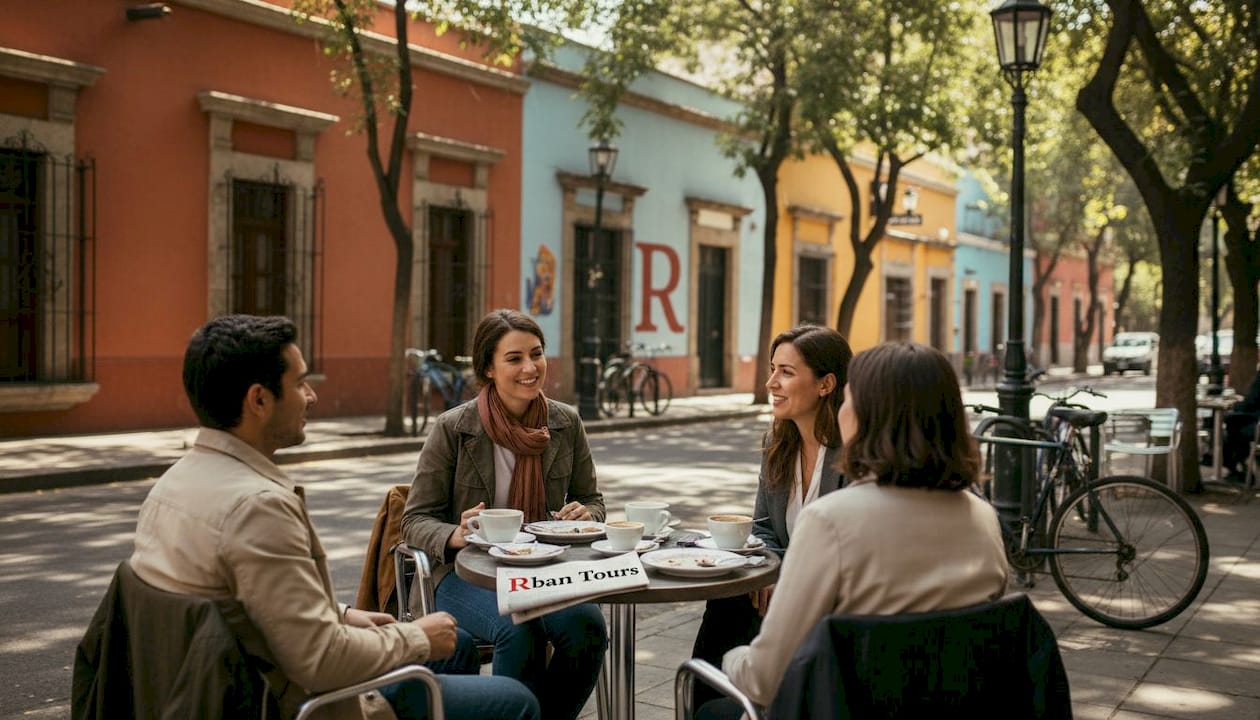
Local etiquette in Mexico City also includes a relaxed approach to timing, lingering after meals, and a slower walking and eating pace than many international visitors expect. This isn’t inefficiency. It’s a different set of values around time and presence.
Here’s what to keep in mind when interacting with locals:
Greet warmly: A handshake or a cheek kiss (among people who know each other) is standard. A genuine smile goes a long way.
Don’t rush: If someone stops to chat, let the conversation breathe. Cutting it short feels dismissive.
Learn a few phrases: Even basic Spanish phrases show respect and open doors that English alone cannot.
Dress for the context: Mexico City is a fashion-forward city. Dressing thoughtfully shows you’re paying attention.
Participate, don’t just observe: Whether it’s a neighborhood market or a community event, lean in.
Pro Tip: If you want to experience the city’s social energy at night, immersive nightlife experiences guided by locals offer a far richer picture of how the city unwinds than any rooftop bar crawl you’d plan on your own.
The daily rhythm of Mexico City also means that mornings are quieter and more personal, afternoons are busy and social, and evenings stretch late into the night. Plan your schedule around these rhythms rather than against them.
Step-by-step: Immersive activities to experience in Mexico City
Once you know how to interact, it’s time to plan the most enriching experiences.
The best immersive activities in Mexico City share one thing: they put you in the same space as people who live here, doing things that actually matter to them. Here’s a practical framework for choosing, booking, and preparing.
Step 1: Identify what genuinely interests you. Immersion works best when it’s personal. Food, art, architecture, sport, music, design. Mexico City has depth in all of these. Pick two or three and build your activity list around them.
Step 2: Prioritize hands-on over passive. There’s a meaningful difference between watching someone cook and cooking alongside them. Between reading about lucha libre and sitting ringside at Arena México feeling the crowd’s electricity.
Step 3: Book in advance. Popular workshops, guided market experiences, and cultural venues fill up quickly. Don’t leave this to chance.
Step 4: Prepare with context. Read about the neighborhood before you visit. Know a little about the history of the market or the significance of the venue. Context transforms a visit into an experience.
Step 5: Reflect and connect. After each activity, give yourself time to sit with it. Write a few notes. Talk to the people you met. Let it settle.
Guided market and food experiences and hands-on cooking workshops are among the most powerful ways to connect with locals, often taking place in home kitchens or family-run market stalls where the conversation flows as freely as the food. These aren’t tourist performances. They’re genuine invitations into daily life.
Cultural immersion activities also include attending local events, exploring extraordinary spaces like the Biblioteca Vasconcelos, and joining neighborhood food tours that move at a human pace.
Hands-on experiences | Observation-focused experiences |
Cooking workshops | Museum visits (passive) |
Guided market tours | City bus tours |
Lucha libre (ringside) | Watching from a distance |
Paint & Sip workshops | Gallery walk-throughs |
Street food tours with locals | Restaurant dining alone |
Community craft classes | Shopping at tourist markets |
For food lovers, our authentic food tours move through neighborhoods with guides who grew up eating this food. For creatively minded travelers, our creative workshops like Paint & Sip combine local art culture with genuine social connection. And for those who want to understand the city’s architecture and stories on foot, our walking cultural tours offer a narrative that no app or audio guide can replicate.
Pro Tip: Book the Frida Kahlo Casa Azul and popular restaurants like Contramar or Pujol weeks in advance. These are not places where walk-ins work, especially during high season.
Scheduling, logistics, and avoiding immersion pitfalls
With your immersive activities chosen, your overall scheduling and approach will make or break your experience.
The single biggest mistake travelers make is trying to do too much. Mexico City is enormous. It has over 300 neighborhoods. Trying to see all of them in three days doesn’t produce immersion. It produces exhaustion and a blurry memory of traffic.
Longer stays unlock neighborhoods and daily life in a way that shorter trips simply cannot. Four to five days is a minimum. A week is better. Two weeks, if you can manage it, is when the city truly starts to feel like yours.
Here are the most common scheduling mistakes and how to avoid them:
Only visiting major sites: The Zócalo and Chapultepec are worth your time, but they shouldn’t consume it. Limit landmark visits to mornings and reserve afternoons for neighborhoods.
Skipping reservations: Advance booking is essential at formal venues and popular dining spots, especially during peak travel periods.
Ignoring timing for neighborhoods: Xochimilco is magical on a weekend morning when local families are out on the trajineras. Visiting on a Tuesday afternoon misses the energy entirely.
Staying in only one area: Base yourself in Roma, Condesa, or Polanco, but make deliberate day trips to Tepito, Coyoacán, and Tlalpan.
Over-scheduling: Leave at least one afternoon per day completely unplanned. Some of the best Mexico City moments happen when you’re not trying to make them happen.
For deeper logistical planning, our CDMX trip planning tips cover neighborhood-by-neighborhood guidance and timing advice from people who know this city intimately.
Even the most tourist-heavy areas of Mexico City can offer authentic moments if you visit at the right time and with the right intention. The Zócalo at 7am, before the crowds arrive, feels like a completely different place. Intention transforms context.
Pro Tip: Build your itinerary around neighborhoods, not attractions. Choose one neighborhood as your anchor for each day, let one or two activities anchor your time there, and then let the rest unfold naturally.
A local perspective: What travelers miss (and what you shouldn’t)
After mastering the logistics, it’s helpful to hear how locals and experienced travelers see cultural immersion differently.
Here’s the honest truth we’ve learned from years of guiding people through Mexico City: the travelers who have the most meaningful experiences are rarely the ones with the most packed itineraries. They’re the ones who are most present.
We’ve seen people rush through the Mercado de Jamaica with a checklist, photographing flowers without smelling them, without asking the vendors their names, without tasting the agua de jamaica someone offered them. And we’ve seen other travelers spend an entire morning in one corner of that same market, leaving with three new friends and a recipe they’ll use for the rest of their lives.
Immersion is not a set of activities. It’s an attitude. It’s the willingness to be a little lost, a little uncertain, and genuinely curious about what’s in front of you. Our insider guide to Mexico City can point you toward the right streets, but no guide can manufacture the openness you bring to them.
The small moments are where the real story lives. The conversation with the tlayuda vendor about her grandmother’s recipe. The spontaneous invitation to watch a neighborhood football match. The street musician whose song stops you mid-stride and holds you there for ten full minutes.
Don’t pressure yourself to “do it all.” That pressure is the enemy of immersion. The city rewards the curious and the patient. Let go of the idea that a perfect Mexico City trip looks like a completed list. The best version of it looks like a handful of moments you’ll still be talking about years from now.
Bring your cultural immersion to life with local experiences
Ready to transform your plans into action? Here’s how to go further in your cultural immersion journey.
We’ve built every Rban Tours experience in Mexico City around exactly the principles in this guide: slow down, go local, participate fully, and let the city’s creative energy lead. Whether you’re a first-time visitor or returning for the third time, there’s always a layer of Mexico City you haven’t reached yet.
Our walking cultural tour in CDMX is one of the best ways to anchor your first days, giving you the neighborhood context and storytelling foundation that makes everything else richer. And when you’re ready to explore the full range of what the city offers, our CDMX curated experiences bring together food, art, nightlife, and creative workshops designed for travelers who want more than a highlight reel. We’d love to be part of your Mexico City story.
Frequently asked questions
How many days are enough for true cultural immersion in Mexico City?
A stay of at least five days allows time for both famous sites and authentic neighborhood experiences. As Fodor’s notes, longer stays unlock neighborhoods and daily life in ways a short trip simply cannot.
Are cooking classes and food tours in Mexico City good for meeting locals?
Yes, these experiences commonly include markets and home kitchens, connecting travelers and residents over shared meals. Guided market and food workshops connect you directly with local hosts and the ingredients that define their daily cooking.
What’s sobremesa, and why is it important?
Sobremesa is extended post-meal conversation and it’s a key part of authentic social life in Mexico City. Lingering after meals is a cornerstone of local etiquette and one of the warmest ways to connect with people here.
Do I need to book major attractions and restaurants ahead of time?
Advance reservations are strongly recommended at formal venues and popular spots. Advance booking is advised especially at peak times, and skipping this step is one of the most common and avoidable frustrations travelers face.
How can I avoid only doing touristy things in Mexico City?
Spend time in local neighborhoods, attend small community events, and allow time for spontaneous interactions. Neighborhood time and local events bring real immersion that goes far beyond the main attractions.
Recommended
Comments