
Authentic Travel Meaning: What Real Experiences Feel Like

Authentic travel is defined as the alignment of your inner self with your external experience, creating genuine connection with a destination’s people, culture, and daily life. Psychologists call this existential authenticity: a psychological state you carry with you, not a quality of any particular place. This means you can have a deeply authentic experience in Barcelona, Mexico City, or Vietnam, whether you are eating at a neighborhood market or joining a local creative workshop. The authentic travel meaning has nothing to do with how remote or exotic your destination is. It has everything to do with how present and engaged you choose to be.
What does authentic travel mean psychologically?
Authentic travel is a psychological state, not a type of destination. Psychologists define it as existential authenticity: the feeling that your external experience matches your genuine self, values, and curiosity. You are not performing for an audience or checking boxes. You are actually there.
A 2026 review of 17 empirical studies published between 2000 and 2024 found that authentic travel is a dynamic, constructive process built through emotional, narrative, and embodied engagement. That finding matters because it means authenticity is not something a destination hands you. You generate it through how you show up.
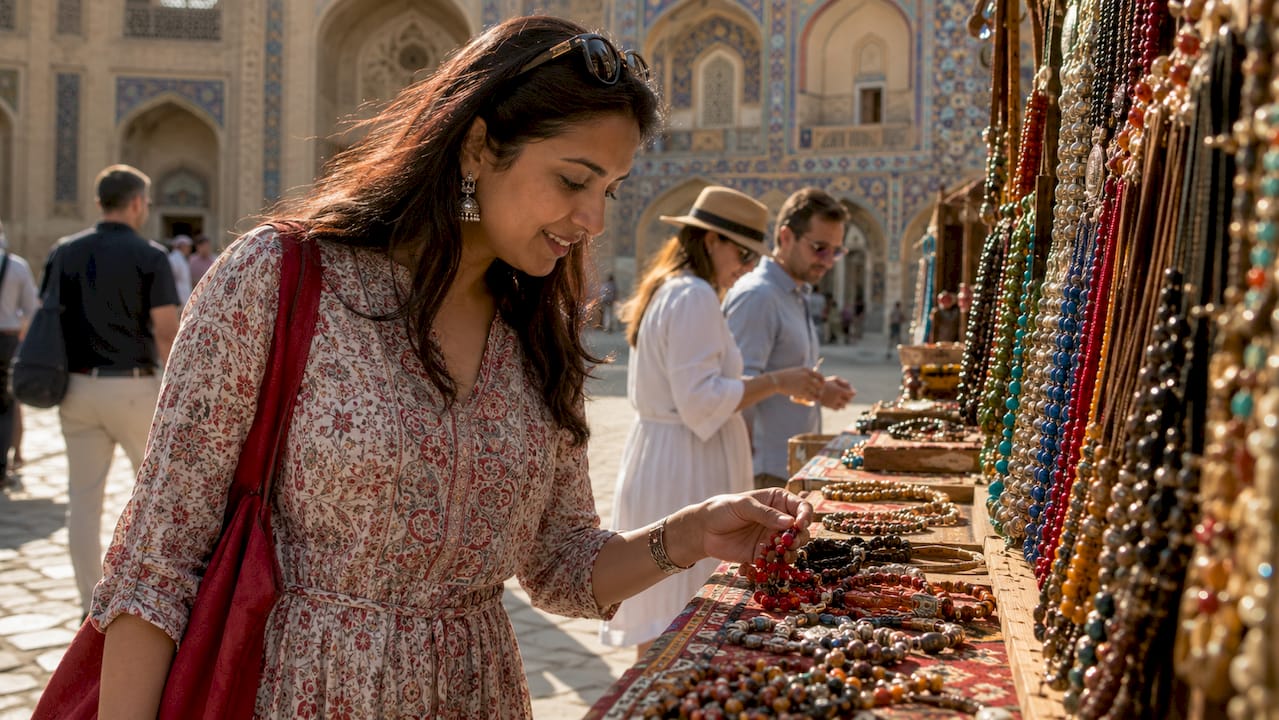
This is the key distinction between authentic and conventional tourism. A conventional tourist moves through a city as a spectator. An authentic traveler shifts into the role of participant, engaging with the rhythm of daily life rather than observing it from a safe distance. That mindset shift from spectator to participant is the single most reliable way to deepen any travel experience.
Pro Tip: Before you arrive at a destination, write down one personal value or curiosity you want to honor during the trip. That single intention shapes every choice you make, from where you eat to who you talk to.
The psychological benefits are real. When your travel experience reflects your genuine self, you return home changed rather than simply rested. You carry a new perspective, a new story, and often a new understanding of your own assumptions.
Authentic travel activates self-reflection by placing you in unfamiliar situations that challenge your habits.
It builds empathy through direct contact with people whose lives differ from yours.
It generates memories tied to emotion and meaning, which research consistently links to longer retention and greater life satisfaction.
It counters the hollow feeling that follows a trip full of photos but short on real connection.
Why authentic travel matters more than sightseeing
Two-thirds of travelers under 40 now prioritize personal enrichment and meaningful experiences over checklist sightseeing. That shift reflects a broader cultural fatigue with surface-level tourism. People are tired of arriving at a famous landmark, taking a photo, and leaving without feeling anything.
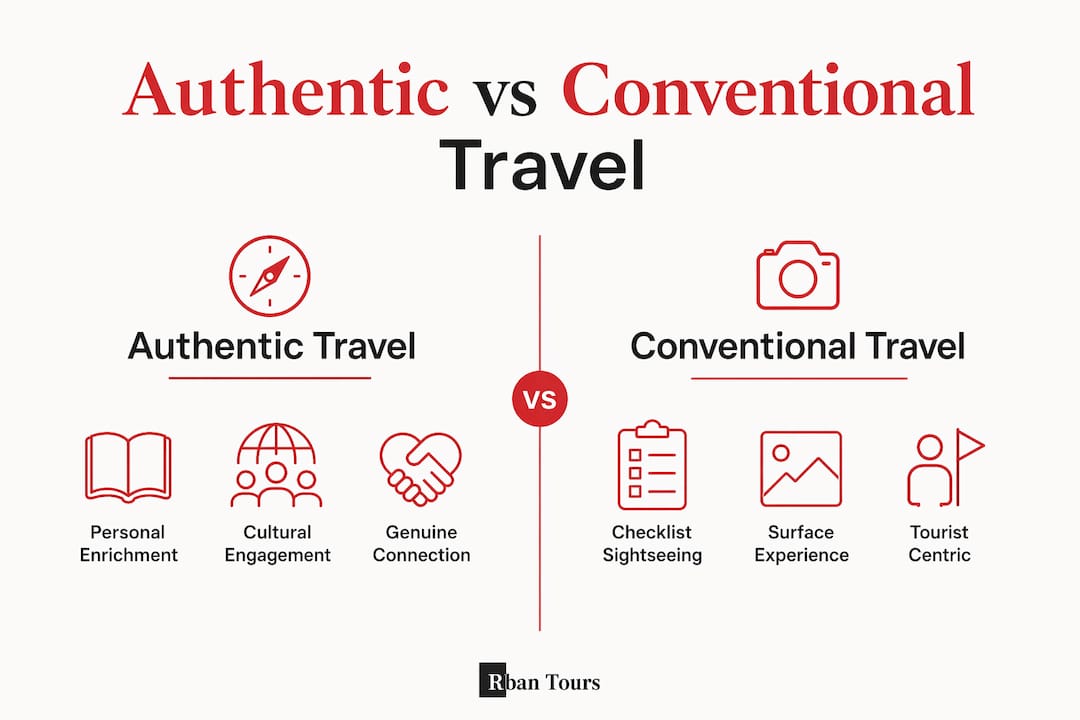
Travel analyst George C. put it directly: authenticity is travel’s new luxury, offering an antidote to tourist burnout and prioritizing the soul of a destination over its social media appeal. That framing is useful because it reframes what you are actually paying for when you travel. The luxury is not the hotel room. It is the quality of your engagement.
Authentic travel also creates real economic and cultural benefits for the places you visit. When you eat at locally owned restaurants, join guides who live in the neighborhood, and participate in traditions tied to the actual calendar of a place, you support the preservation of culture rather than its dilution.
“Authenticity prioritizes the soul of a destination over highlight reels and social media-worthy moments.” — The Wanders
The contrast with conventional tourism is sharp. A staged cultural performance designed for tourists extracts money from a place while giving nothing back to its living culture. A genuine local experience, timed to a real seasonal tradition and run by people from that community, does the opposite. The difference is felt immediately and remembered long after the trip ends.
Authentic travel supports local profit retention and cultural continuity.
It generates meaningful memories rather than a collection of identical tourist photos.
It builds cross-cultural understanding that outlasts the trip itself.
It counters tourist burnout by replacing passive consumption with active engagement.
Common myths about what authentic travel requires
The biggest misconception about genuine travel is that it requires extreme immersion or the complete abandonment of comfort. That is not true. Most travelers want a balance: real and enjoyable experiences, not discomfort for its own sake. Authenticity does not mean sleeping on a floor or refusing to stay in a well-designed hotel.
A second myth is that authenticity only exists off the beaten path. The most authentic moments often happen in mundane, everyday settings rather than at famous landmarks. A conversation with a barista in a neighborhood café in Rome can be more genuine than a guided tour of the Colosseum. The setting is ordinary. The connection is real.
Pro Tip: When evaluating whether an experience is genuinely authentic, ask two questions: Does the money stay in the local community? Does this activity happen because local people do it, or was it created specifically for tourists?
The third myth is that friction is a problem. Authentic travel involves friction, such as language barriers or unfamiliar logistics, and that friction is actually the mechanism of engagement. When you have to figure something out, ask for help, or navigate an unfamiliar system, you are interacting with a place rather than being carried through it.
Experience type | What it signals |
Locally owned, seasonally timed | Genuine cultural practice worth seeking |
Created specifically for tourists | Staged performance, low authenticity value |
Involves friction or local logistics | Real engagement with place and people |
Comfort-only, fully insulated | Passive consumption, minimal connection |
Beware of commercialized authenticity. Many operators sell the aesthetic of local culture without the substance. A “traditional” cooking class held in a tourist hotel kitchen, taught in English only, and sourcing ingredients from a supermarket is a performance. A class held in a home kitchen, taught by someone who actually cooks that food daily, is the real thing.
How to find and create real travel experiences
Authenticity is generated intentionally through designing your travel experience around psychological purpose, not just destination choice. That means making deliberate decisions before and during your trip.
Slow travel is the most reliable method. Spending more time in fewer places forces you to move past the tourist layer of a city and into its actual rhythm. You start recognizing faces. You find your own café. You stop consulting a map for every block. That familiarity is the foundation of genuine connection.
Pro Tip: Plan at least one unscheduled half-day per destination. Leave the itinerary behind and follow curiosity. The best encounters in any city happen when you are not rushing toward a scheduled attraction.
Local guides who live in the neighborhoods they show you are not a luxury add-on. They are the most direct path to understanding a place. Local guides enrich experiences by offering cultural context that no guidebook captures, because that context lives in personal memory and daily experience, not published text.
Choose locally owned accommodations, restaurants, and tour operators.
Engage in activities that locals actually do: markets, neighborhood festivals, creative workshops, street food routes.
Learn five to ten words in the local language. The effort signals respect and opens doors.
Apply economic and seasonal integrity criteria: support businesses where profit stays local and traditions are practiced in their natural season.
Travel with locals who integrate customs, cuisine, and daily life into the experience rather than presenting a curated highlight reel.
Approach | Why it works |
Slow travel, longer stays | Builds familiarity and moves past tourist surface |
Local guide-led experiences | Delivers cultural context unavailable in print |
Neighborhood markets and workshops | Connects you to daily life and local creativity |
Seasonal and locally owned activities | Supports genuine culture, not staged performance |
The goal is not to become a local. That is neither possible nor the point. The goal is to engage with a place on its own terms, with curiosity and respect, long enough to feel its actual pulse.
Key Takeaways
Authentic travel is a psychological state of genuine engagement, not a type of destination, and it is generated intentionally through mindset, choices, and direct human connection.
Point | Details |
Authenticity is a mindset | It is a psychological state you create, not a quality any destination automatically provides. |
Friction signals real engagement | Language barriers and local logistics are features, not problems. They mean you are actually interacting. |
Balance is the goal | Most travelers want real experiences without extreme discomfort. Comfort and authenticity coexist. |
Economic integrity matters | Choose locally owned, seasonally grounded experiences to support culture rather than consume it. |
Slow travel deepens connection | Longer stays in fewer places move you past the tourist layer into the actual rhythm of a city. |
What we have learned about authentic travel after years on the ground
We have spent years designing experiences in cities like Barcelona, Mexico City, and Vietnam, and the single most consistent observation is this: the travelers who leave most transformed are not the ones who visited the most sites. They are the ones who stayed curious the longest.
The conventional travel industry sells confidence. It tells you exactly where to go, what to see, and how long to spend there. That certainty is comfortable, but it closes off the unscripted moments where real connection happens. A wrong turn in a Barcelona neighborhood that leads to a conversation with a ceramicist. A street food stall in Mexico City where the cook explains the history of a dish while she makes it. These moments cannot be scheduled. They can only be made possible by slowing down and staying open.
We also think the “authentic vs. tourist” framing is overused and slightly dishonest. Every traveler is a tourist to some degree. The question is not whether you are a tourist but whether you are a curious one. Curiosity is the actual engine of authentic experience. It makes you ask questions, linger longer, and engage rather than observe.
The hardest part of authentic travel is tolerating uncertainty. Not knowing what a menu says, not being sure if you are on the right street, not having a plan for the afternoon. That discomfort is exactly where the most memorable experiences live. We have learned to treat it as a signal, not a problem.
— Rban
Rbantours brings authentic experiences to life in your next city
Rbantours was built around one conviction: the best way to know a city is to live it like an insider. Every experience we design, from walking cultural tours through Barcelona’s neighborhoods to street food explorations in Mexico City, is built around local knowledge, real community connection, and the kind of creative energy that only comes from people who genuinely love where they live.
[
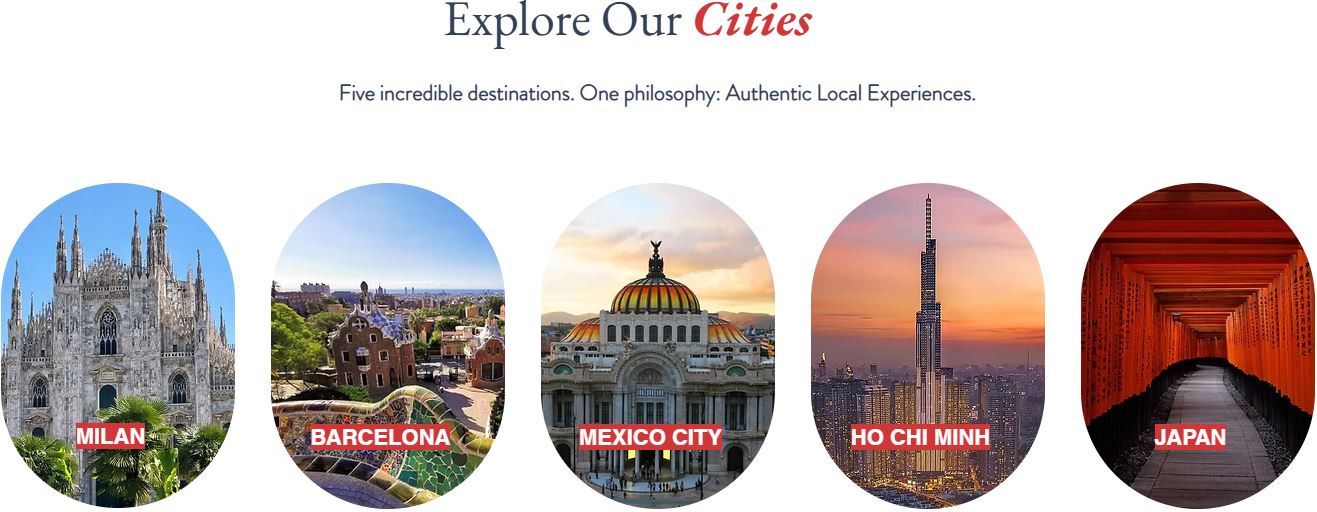
We work with local creatives, guides, and venues across Barcelona, Mexico City, Vietnam, Italy, and Japan to create moments that go well beyond sightseeing. Whether you want to feel the heartbeat of a city through its food, its art, or its people, our Barcelona experiences and CDMX tours give you direct access to the culture that makes each destination worth visiting. Real places. Real people. Experiences worth remembering.
FAQ
What is the authentic travel meaning in simple terms?
Authentic travel means engaging with a destination in a way that reflects your genuine self and creates real connection with local people, culture, and daily life. It is a psychological state, not a type of place.
Does authentic travel require going off the beaten path?
No. Authentic moments happen in everyday settings like neighborhood cafés and local markets, not only in remote or obscure locations. The quality of your engagement matters far more than the fame of your destination.
How is experiential travel different from authentic travel?
Experiential travel describes any activity-based trip. Authentic travel is a subset: it specifically requires that the experience aligns with your genuine values and creates real cultural connection, rather than simply being active or hands-on.
Why do travelers feel unfulfilled after conventional tourism?
Conventional tourism often prioritizes volume over depth, moving travelers through attractions without genuine engagement. Two-thirds of travelers under 40 now report that personal enrichment matters more than sightseeing, which explains the growing dissatisfaction with checklist-style trips.
How do I know if a travel experience is genuinely authentic?
Ask whether the activity exists because local people practice it and whether the money stays within the local community. Authentic experiences carry economic and seasonal integrity: they are rooted in real tradition and support the people who keep that tradition alive.
Recommended
Comments