
Mexico City Experiences Step by Step: Your 2026 Guide


Mexico City experiences step by step is the most effective way to unlock one of the world’s most culturally layered cities without burning out on day two. CDMX sits at 7,350 feet above sea level, which means altitude fatigue is real, crowds are dense, and the sheer volume of world-class museums, markets, and neighborhoods can overwhelm even experienced travelers. This guide structures your visit by neighborhood, balances cultural, culinary, and experiential activities, and gives you realistic timing so every hour counts. We at Rbantours have spent years learning the city’s rhythm, and this is how we’d walk you through it.
How to plan your Mexico City experiences step by step
Getting around CDMX efficiently is the foundation of any good itinerary. Mexico City’s Movilidad Integrada system includes the Metro, Metrobús, Trolleybús, and Cablebús, all at 5 MXN per ride. That price point makes it the most practical daily transport option in the city. The system covers virtually every major neighborhood you’ll want to visit.
Here’s how to set yourself up before your first full day:
Download the CDMX app and log in with your Llave CDMX account to access the virtual Movilidad card. Your phone needs NFC enabled for tap validation. The minimum recharge is 15 pesos, and the app works on Android and Huawei devices.
Avoid rush hours between 7:00 and 9:30 AM and again from 6:00 to 8:00 PM. Trains are genuinely packed during those windows, and it’s not a pleasant introduction to the city.
Use women-only Metro cars if applicable. They’re marked clearly on the platform and provide a noticeably calmer ride during peak times.
For airport arrivals, use official taxi kiosks or rideshare apps rather than street taxis. Official airport taxis are safer and eliminate the stress of price negotiation when you’ve just landed.
Save rideshare for evenings. Walking in neighborhoods like Roma and Condesa gives you genuine local interactions. Daytime rideshare is best reserved for night transfers when traffic eases and safety matters more.
Pro Tip: Rent a bike in Condesa or Roma through the Ecobici city bike-share program for a few hours. These neighborhoods are flat, tree-lined, and genuinely pleasant on two wheels.
Step-by-step guide to Centro Histórico

Centro Histórico is where Mexico City’s story begins, and it rewards a slow, deliberate approach. Starting with a market breakfast before any museum visit enhances immersion and grounds you in daily local life before the tourist crowds arrive. Head to Mercado San Juan or grab a traditional desayuno at a nearby fonda around 8:30 AM. Chilaquiles, tamales, and café de olla are the standard order.
Follow this sequence for the rest of the morning:
Zócalo (9:00 AM): Arrive early to feel the scale of one of the world’s largest public squares without the midday crowds. The political murals on the surrounding government buildings tell more history than most guidebooks.
Metropolitan Cathedral (9:15 AM): Entry is free. Spend 20 to 30 minutes inside. The sinking foundation, visible in the tilted floors, is one of the most quietly dramatic architectural stories in the Americas.
Palacio Nacional (9:45 AM): Free entry. Diego Rivera’s floor-to-ceiling murals depicting Mexican history are inside. Budget 45 minutes minimum. This is one of the most significant mural cycles in the world, and most visitors rush it.
Templo Mayor (11:00 AM): Entry costs 210 pesos for foreign visitors in 2026 under updated INAH tariffs. Mexican nationals and foreign residents pay 105 pesos with valid ID. Budget 60 to 90 minutes. The on-site museum is genuinely excellent and included in the ticket.
Lunch at a cantina (12:30 PM): Cantina La Ópera on Avenida 5 de Mayo has been serving since 1876. Order the caldo tlalpeño and take your time. This is not a place to rush.
Attraction | Entry fee (2026) | Suggested time |
Zócalo | Free | 15 minutes |
Metropolitan Cathedral | Free | 25 minutes |
Palacio Nacional | Free | 45 minutes |
Templo Mayor + Museum | 210 MXN (foreigners) | 90 minutes |
Pro Tip: Altitude hits hardest on your first full day. If you feel a headache coming on by midday, sit down, drink water, and skip one stop rather than pushing through. A slower morning beats a ruined afternoon.
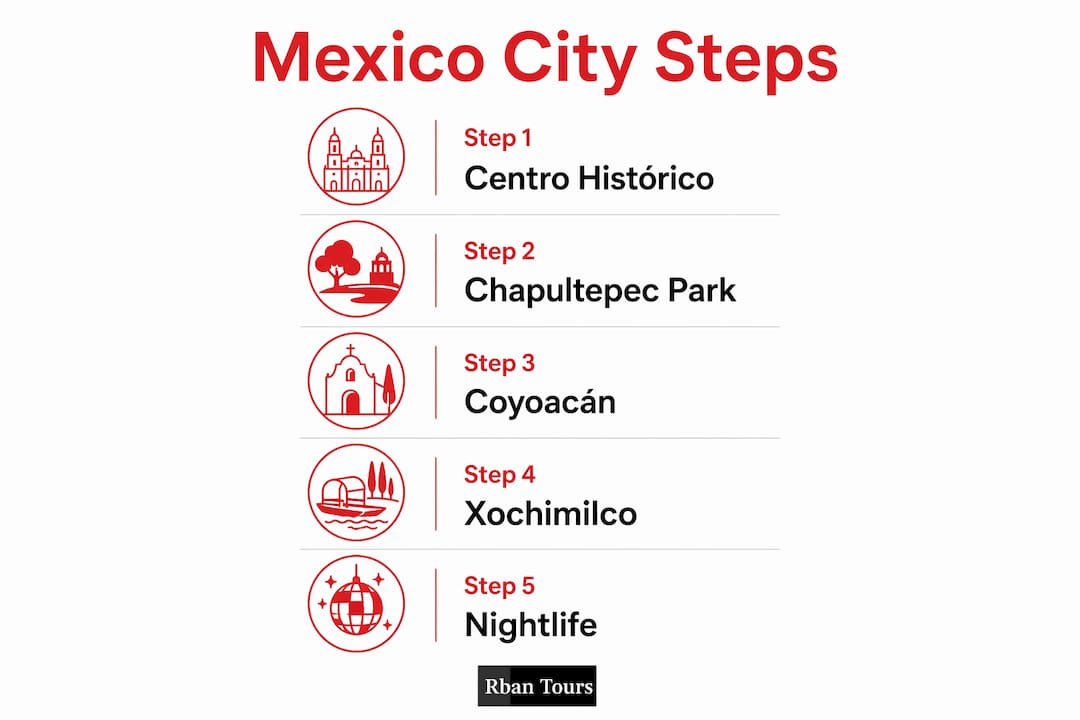
What to do at Chapultepec Park and Polanco
Chapultepec is the city’s green lung, and it holds two of Mexico’s most important cultural institutions. A typical visit to the Museo Nacional de Antropología alone takes four to five hours if you engage with it properly. Most travelers try to combine it with Chapultepec Castle in the same morning. That’s too much. Pick one per visit.
Here’s how to approach the area:
Get there by Metro. Take Line 1 to Chapultepec station. It drops you at the park’s main entrance and takes about 20 minutes from Centro Histórico.
Museo Nacional de Antropología is the priority for first-time visitors. Entry is 210 pesos for foreigners under 2026 INAH pricing. The Aztec Sun Stone room alone justifies the trip. Focus on three to five halls rather than trying to cover everything. Pacing museum visits this way limits fatigue while allowing meaningful cultural engagement.
Chapultepec Castle sits at the top of a hill inside the park and offers panoramic views of the city. Budget 90 minutes. It’s a separate INAH site with its own entry fee.
Walk into Polanco for the evening. This upscale neighborhood borders the park’s north edge. Avenida Presidente Masaryk has high-end boutiques, and the restaurant scene around Calle Emilio Castelar is exceptional. Pujol, one of Latin America’s most celebrated restaurants, is here. Book weeks ahead if that’s your target.
Site | Entry fee (2026) | Ideal visit duration |
Museo Nacional de Antropología | 210 MXN (foreigners) | 3 to 5 hours |
Chapultepec Castle | 95 MXN | 90 minutes |
Chapultepec Park grounds | Free | Open-ended |
How to experience Coyoacán and Xochimilco step by step
Coyoacán and Xochimilco represent the soul of authentic local culture in Mexico City. These two neighborhoods sit in the city’s south and work beautifully together as a full-day experience. Start early, because both reward morning energy.
Follow this sequence:
Frida Kahlo Museum, 9:00 AM: Book your ticket weeks in advance. Reservations for Casa Azul sell out far ahead, especially on weekends. The museum opens at 10:00 AM, but the line forms early. Budget 90 minutes inside. The garden, personal objects, and Diego Rivera’s presence throughout the house make this one of the most emotionally resonant museum experiences in Mexico.
Jardín Centenario and Plaza Hidalgo, 11:30 AM: Walk five minutes from Casa Azul to the main square. Grab a coffee, watch the street performers, and feel the colonial village atmosphere that somehow survives inside one of the world’s largest cities.
Mercado de Coyoacán, 12:00 PM: This covered market is famous for its tostadas. Order two or three varieties at the stalls near the center. It’s loud, colorful, and completely local.
San Ángel artisan market (Saturdays only): If your visit falls on a Saturday, take a short taxi ride to the Bazar del Sábado in San Ángel. Diego Rivera’s studio, now the Museo Casa Estudio Diego Rivera y Frida Kahlo, is nearby and worth 45 minutes.
Xochimilco trajineras, 3:00 PM: Take the Metro to Tasqueña, then the Tren Ligero to Xochimilco. Hire a trajinera (flat-bottomed boat) at one of the official embarcaderos. Weekday afternoons are quieter than Sunday mornings, which can feel like a floating party. Budget two hours on the water.
Bring cash for the trajinera hire and the food boats that pull alongside.
Avoid the Nativitas embarcadero on Sundays if you want a calmer experience.
The floating gardens (chinampas) are a UNESCO World Heritage Site and one of the most genuinely unique things to do in Mexico City.
Pro Tip: End the day in Coyoacán rather than rushing back to Centro. The mezcal bars around Jardín Centenario come alive after 7:00 PM, and the neighborhood feels completely different at night. Try a local mezcal bar for a cultural close to the day.
Key takeaways
Exploring Mexico City step by step, grouped by neighborhood and paced with altitude in mind, produces a richer and less exhausting experience than any checklist-based approach.
Point | Details |
Group by neighborhood | Dedicate one full day per area to avoid transit fatigue and build genuine immersion. |
Budget for INAH fees | Foreign visitors pay 210 MXN at major sites in 2026; carry ID for resident pricing. |
Book Frida Kahlo Museum early | Reservations sell out weeks ahead, especially on weekends. |
Use the Metro for daytime travel | At 5 MXN per ride, it’s fast, affordable, and covers every key neighborhood. |
Pace your museum visits | Limit yourself to three to five halls per museum to stay engaged and avoid fatigue. |
Why pacing is the real secret to Mexico City
We’ve guided travelers through CDMX long enough to know the most common mistake: treating it like a checklist. People arrive with twelve things to see on day one and end up exhausted by noon, irritable by 3:00 PM, and missing the actual texture of the city entirely.
The travelers who leave Mexico City genuinely moved are the ones who sat at a cantina long enough to hear the kitchen noise, who wandered off the Coyoacán map and found a courtyard gallery, who took the Metro at 10:00 AM instead of 8:00 AM and actually enjoyed the ride. Choosing one area per day and walking extensively is not a compromise. It’s the method.
Altitude is also not a joke at 7,350 feet. We’ve seen fit, experienced travelers hit a wall by early afternoon on day one. Drink more water than you think you need. Eat before you’re hungry. Build a rest window into every afternoon, even if it’s just 30 minutes in a café. The city will still be there.
The neighborhood-by-neighborhood approach we use at Rbantours isn’t just about logistics. It’s about giving each part of the city the attention it deserves. Centro Histórico has a completely different energy from Coyoacán, and Polanco feels nothing like Xochimilco. Rushing between them in a single day means you experience none of them fully. Slow down. The city rewards it.
— Rban
Experience Mexico City with Rbantours
We design every Mexico City experience to put you inside the city’s pulse, not just in front of it. Whether you want a curated food tour through local markets and street stalls, a guided walk through the murals and hidden courtyards of Centro Histórico, or an evening bar-hopping through Coyoacán’s mezcal scene, Rbantours builds each experience around authentic connection and local knowledge.
[

Our CDMX experiences are led by local creatives who know the neighborhoods the way only insiders can. Booking is straightforward, groups stay small, and every detail is handled so you can focus on the experience itself. Browse the full range of Mexico City tours and find the one that fits your travel style.
FAQ
What is the best way to get around Mexico City?
The Metro and Metrobús system costs 5 MXN per ride and covers all major neighborhoods. Use rideshare apps for evening transfers and airport arrivals for added safety.
How far in advance should I book the Frida Kahlo Museum?
Book at least two to three weeks ahead, especially for weekend visits. Tickets sell out well in advance and cannot be purchased at the door.
How much does it cost to enter major museums in Mexico City in 2026?
Foreign visitors pay 210 MXN at INAH-managed sites including the Museo Nacional de Antropología and Templo Mayor. Mexican nationals and foreign residents with valid ID pay 105 MXN.
How many museums should I visit per day in Mexico City?
Limit yourself to one major museum per day. Selecting three to five halls within a large museum like the Museo Nacional de Antropología keeps the experience meaningful without causing fatigue.
What is the best neighborhood to start exploring Mexico City?
Centro Histórico is the strongest starting point for first-time visitors. It concentrates the Zócalo, Templo Mayor, Palacio Nacional, and Diego Rivera’s murals within easy walking distance of each other.
Recommended
Comments