
Social Connection in Travel: Why It Matters in 2026

Social connection in travel is defined as the intentional pursuit of meaningful interactions with locals and fellow travelers that transform a trip from a sightseeing checklist into a genuinely human experience. 84% of global travelers express a strong desire to connect with new places and people, regardless of what is happening in the world around them. That number tells us something important: the hunger for real human contact is not a travel trend. It is a fundamental need that travel uniquely satisfies. We see it in every city we work in, from the narrow streets of Kyoto to the sun-soaked plazas of Barcelona. The people who leave a trip changed are almost always the ones who connected with someone along the way.
Why is social connection becoming a primary travel motivation?
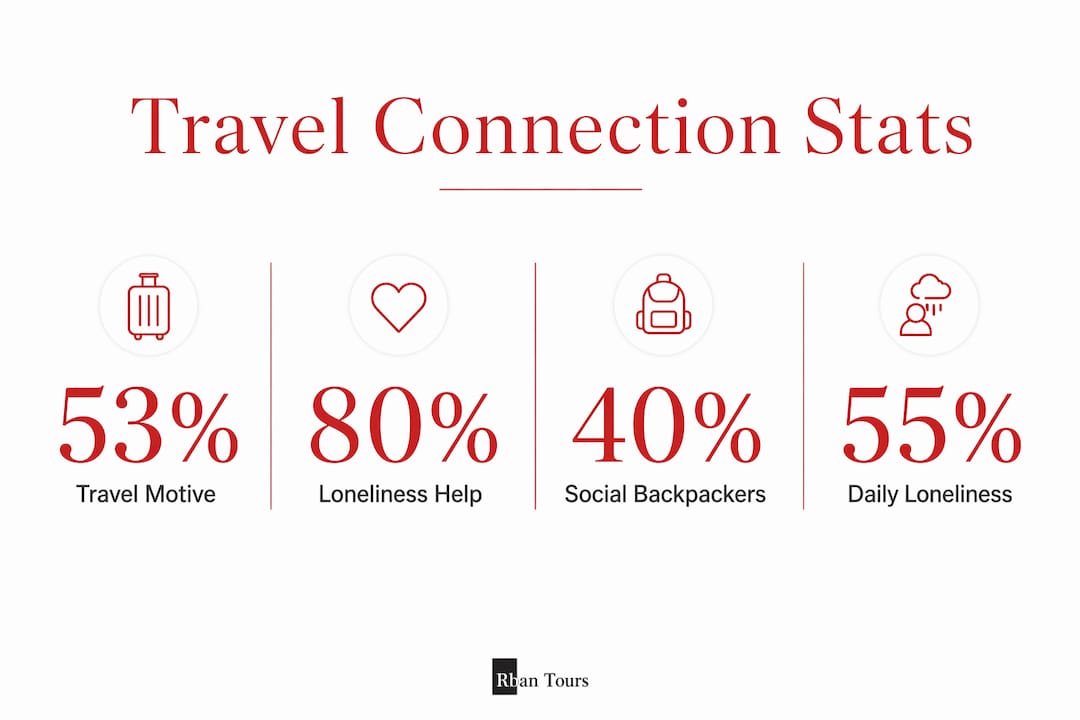
The shift is rooted in something deeper than wanderlust. 55% of travelers report loneliness in their daily lives, and 40% say they struggle to meet new people at home. Travel fills a gap that modern life has quietly created.
Digital life has replaced many of the spontaneous, low-stakes interactions that once happened naturally in neighborhoods, workplaces, and public spaces. Weakened traditional community structures and screen-mediated socializing have left many people craving something more physical and present. Travel offers exactly that: a low-obligation space where you can talk to a stranger without the social weight of your everyday identity.
The numbers confirm the shift is intentional, not accidental:
80% of travelers say travel helps them combat loneliness, a figure that climbs to 82% among men.
53% of travelers have traveled or seriously considered traveling overseas specifically to meet new people.
Social interaction is no longer a byproduct of travel. For the majority of travelers, it is the point.
This has given rise to what researchers now call social backpacking, a term coined to describe the shift from solitary self-discovery travel to intentional communal experiences. Social backpacking reframes the classic backpacker identity around community rather than independence. Hospitality experts note that travelers are moving away from pure destination-ticking toward experiences defined by who they meet and what they share. The destination is still the backdrop. The people are the story.
What are the most effective ways to build connections while traveling?
Building genuine travel friendships does not happen by accident. It requires choosing the right environments and showing up with the right mindset.
Choose accommodations with social architecture
The physical design of where you stay shapes who you meet. Small guesthouses, boutique inns, and social hostels create natural gathering points: shared kitchens, communal tables, rooftop terraces. These spaces do the social work for you. A private hotel room in a chain property, no matter how comfortable, closes the door on spontaneous connection. Environments intentionally designed for interaction, including shared meals and hosted events, are the single most reliable predictor of whether travelers form meaningful bonds. Choosing your accommodation is choosing your social life for that trip.
Prioritize shared experiences over solo sightseeing
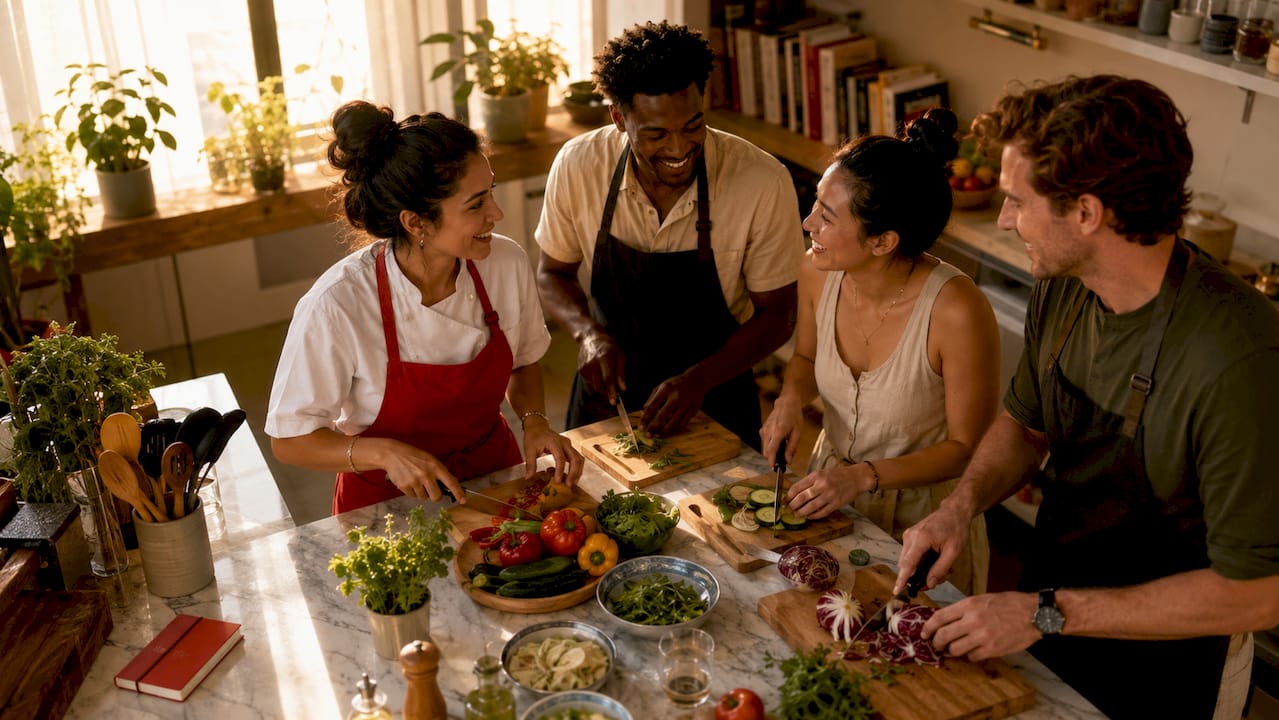
Group activities compress the timeline for connection. A cooking class in Mexico City, a street food walk in Hanoi, or a Paint & Sip workshop in Barcelona puts you shoulder to shoulder with people who already share your curiosity. Conversation starts naturally because the experience gives you something immediate to talk about. Small-group tours, in particular, create the right conditions: intimate enough to actually know each other, large enough to offer variety.
Pro Tip: Before your trip, join any pre-trip group chat offered by your tour operator. Research shows that pre-trip digital icebreakers significantly strengthen the bonds travelers form once on the ground. Arriving already knowing someone’s name changes everything.
Eat with intention
Food is the world’s most reliable social lubricant. Sitting at a communal table, sharing dishes, or joining a local family for a meal creates intimacy faster than almost any other activity. Local cuisine experiences are among the most effective ways to facilitate genuine interaction between travelers and locals. Skip the solo table by the window. Ask to be seated with others. Say yes to the dish you cannot pronounce.
Here is a practical framework for building connections on any trip:
Book small-group experiences over large bus tours. Smaller groups mean real conversation.
Stay in social accommodations at least part of your trip, even if you prefer privacy overall.
Eat at communal tables or local spots where the owner is also the cook.
Use pre-trip platforms to connect with fellow travelers before you land.
Say yes to one unplanned invitation per destination. That is usually where the best stories come from.
How do social connections shape cultural immersion and personal growth?
Connecting with people is the fastest route to understanding a place. A guidebook tells you what a city looks like. A local tells you how it feels. Traveling with locals gives you access to the rhythm of a place that no amount of research can replicate.
The personal growth dimension is equally striking. 48% of travelers on social backpacking trips reported stepping outside their comfort zone, leading to significant personal growth. 27% said they learned more about themselves than on any previous trip. 17% described the experience as better than therapy. These are not small claims. They point to something real: when you remove yourself from your daily roles and routines, you become more open, more curious, and more willing to be changed.
“Travel environments allow a relaxation of daily roles, encouraging openness and authentic socializing that digital life rarely permits.” — Hospitality Net
Cultural exchanges in travel work because they are mutual. You are not just observing a culture. You are participating in it, and the people you meet are learning from you too. That reciprocity creates memories that outlast any photograph. The role of authentic local venues in this process cannot be overstated. A neighborhood bar in Barcelona, a family-run ramen shop in Osaka, a market stall in Mexico City: these are the classrooms where real cultural education happens.
What challenges do travelers face when trying to connect socially?
The biggest misconception in social travel is that simply going solo guarantees you will meet people. It does not. You can be surrounded by hundreds of travelers in a popular destination and still feel completely alone. Feeling isolated despite being physically surrounded by people is one of the most common and least discussed travel experiences.
Common barriers include:
Language gaps that make casual conversation feel like hard work.
Misaligned expectations when a trip is marketed as social but lacks real structure for interaction.
Social anxiety that intensifies in unfamiliar environments without a familiar support network.
Over-scheduling that leaves no unstructured time for organic encounters.
The solution is not to push harder socially. It is to choose better environments. Vetting group trips for intentional social architecture, such as shared dining, hosted activities, and facilitated introductions, makes connection far more likely than willpower alone. Look for operators who build community into the itinerary, not just the marketing copy.
Pro Tip: Balance is not optional. Schedule at least one solo morning or afternoon per destination. Travelers who protect some alone time consistently report feeling more present and open during group moments. Socializing from a place of genuine energy beats forced interaction every time.
The small group travel model addresses most of these barriers directly. Smaller groups reduce the intimidation factor, create natural conversation loops, and give facilitators the ability to read the room and adjust. If you struggle with social anxiety in travel, starting with a well-designed small-group experience is the most practical first step.
Key takeaways
Social connection in travel is not a bonus feature of a good trip. It is the mechanism through which travel becomes genuinely transformative, building friendships, cultural understanding, and self-knowledge that last far beyond the return flight.
Point | Details |
Connection is the primary motive | 53% of travelers now travel specifically to meet new people, not just see new places. |
Social architecture drives results | Choose accommodations and experiences designed for interaction, not just proximity to other travelers. |
Pre-trip preparation matters | Join group chats and digital icebreakers before departure to strengthen bonds from day one. |
Personal growth follows social risk | 48% of social travelers reported stepping outside their comfort zone and experiencing significant growth. |
Balance protects the experience | Protect solo time within social trips to stay energized and genuinely present with others. |
What we have learned from watching travelers connect
The most honest thing I can say about social travel is this: most people underestimate how much the structure of a trip determines its social outcome. Travelers often blame themselves when they do not connect with others. They think they are too introverted, too old, too set in their ways. In almost every case, the real issue is that the trip was not designed for connection.
We have watched this play out across dozens of experiences in Japan, Barcelona, and Mexico City. The travelers who form the deepest bonds are rarely the most outgoing. They are the ones who chose the right environment and showed up with genuine curiosity. A shared creative activity, a meal at a local family’s table, a neighborhood walk led by someone who actually lives there: these are the conditions that make strangers into friends.
The other thing worth saying plainly: social travel does not mean constant socializing. The travelers who get the most out of community experiences are the ones who also protect their quiet moments. Connection deepens when you have had time to process it. The best conversations often happen on the last night, not the first.
We are also watching a generational shift that goes beyond trend reports. Younger travelers are actively choosing experiences over destinations. They are asking “who will I meet?” before “what will I see?” That is a meaningful reorientation. It suggests that the future of travel is less about geography and more about the quality of human contact it makes possible. That is a future we are genuinely excited to be part of.
— Rban
Rbantours designs trips around the people you will meet
At Rbantours, we build every experience around one question: does this create the conditions for real connection?
[
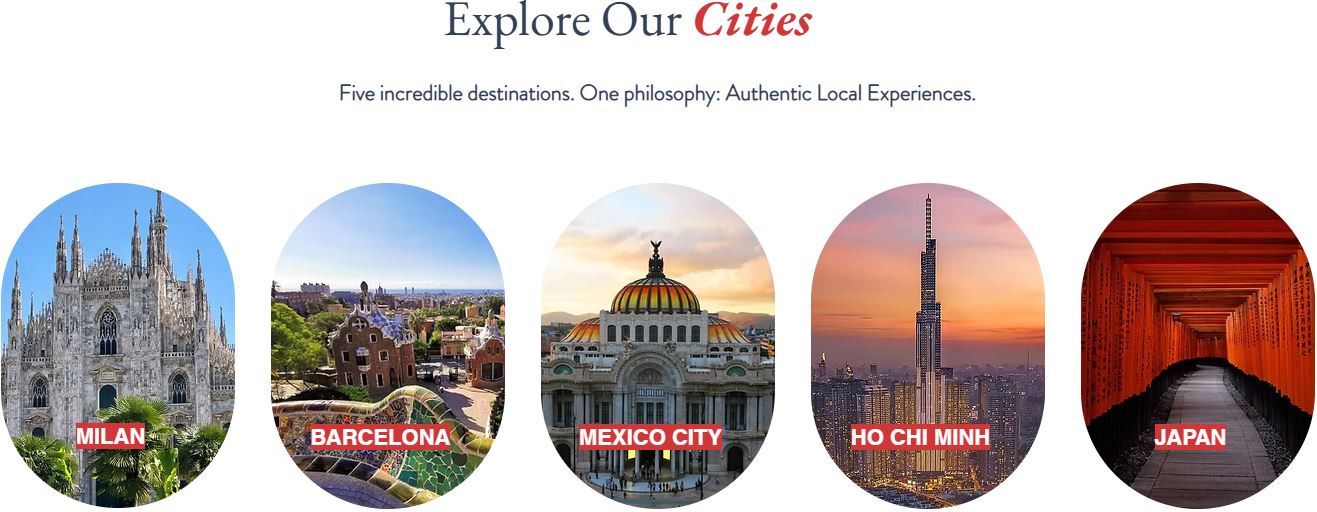
Our small-group tours in Japan, Barcelona, and Mexico City are designed with social architecture at their core. From street food walks in CDMX to creative workshops in Barcelona’s most alive neighborhoods, each experience puts you alongside people who share your curiosity about the world. We work with local hosts, artists, and guides who bring you into the pulse of a city, not just its surface. If you are ready to travel in a way that leaves you with more than photographs, our experiences are where to start.
FAQ
What is social connection in travel?
Social connection in travel is the intentional pursuit of meaningful interactions with locals and fellow travelers that go beyond surface-level tourism. It includes shared meals, group activities, cultural exchanges, and friendships formed through immersive travel experiences.
Why do travelers prioritize social connection over sightseeing?
80% of travelers say travel helps them combat loneliness, and 53% have traveled specifically to meet new people. For most modern travelers, human connection is the destination.
How can I connect with locals while traveling?
The most effective methods include joining small-group tours led by local guides, eating at family-run restaurants, attending hosted community events, and choosing accommodations with communal spaces. Group tour strategies that prioritize local interaction consistently produce the deepest cultural exchanges.
Does solo travel guarantee social connection?
Solo travel creates opportunity, but not certainty. Without intentional social architecture, such as shared activities and communal spaces, solo travelers frequently report feeling isolated. Choosing trips designed for community is more reliable than traveling alone and hoping for the best.
What is social backpacking?
Social backpacking is a travel style that shifts the focus from solitary self-discovery to intentional communal experience. Research shows that 48% of social backpackers formed lifelong friendships on their trips, making it one of the most effective formats for building travel friendships.
Recommended
Comments