
What Is a Local Lifestyle Tour? Your Authentic Travel Guide


Most travelers assume a local lifestyle tour is just a casual walk through a neighborhood with a friendly guide. It isn’t. A local lifestyle tour is a structured, immersive experience designed to pull you into the actual rhythm of a community — the food people cook at home, the workshops passed down through generations, the festivals that define a place’s identity. If you’ve ever left a destination feeling like you only saw its surface, this is the style of travel that changes that. This article breaks down exactly what these tours are, how they work, and how to find ones worth your time.
Table of Contents
Key Takeaways
Point | Details |
Beyond sightseeing | Local lifestyle tours center on daily life, local hosts, and genuine cultural interaction rather than landmarks. |
Community governance matters | Authentic tours are often managed by local committees that protect community interests and prevent staged experiences. |
Hands-on activities define them | Cooking classes, artisan workshops, and festivals are the core of what to expect on local tours. |
Vetting is non-negotiable | Look for tours with local host involvement, consent-based interactions, and transparent community benefit. |
Deeper impact | Choosing community lifestyle excursions supports local economies and contributes to cultural preservation. |
What a local lifestyle tour actually is
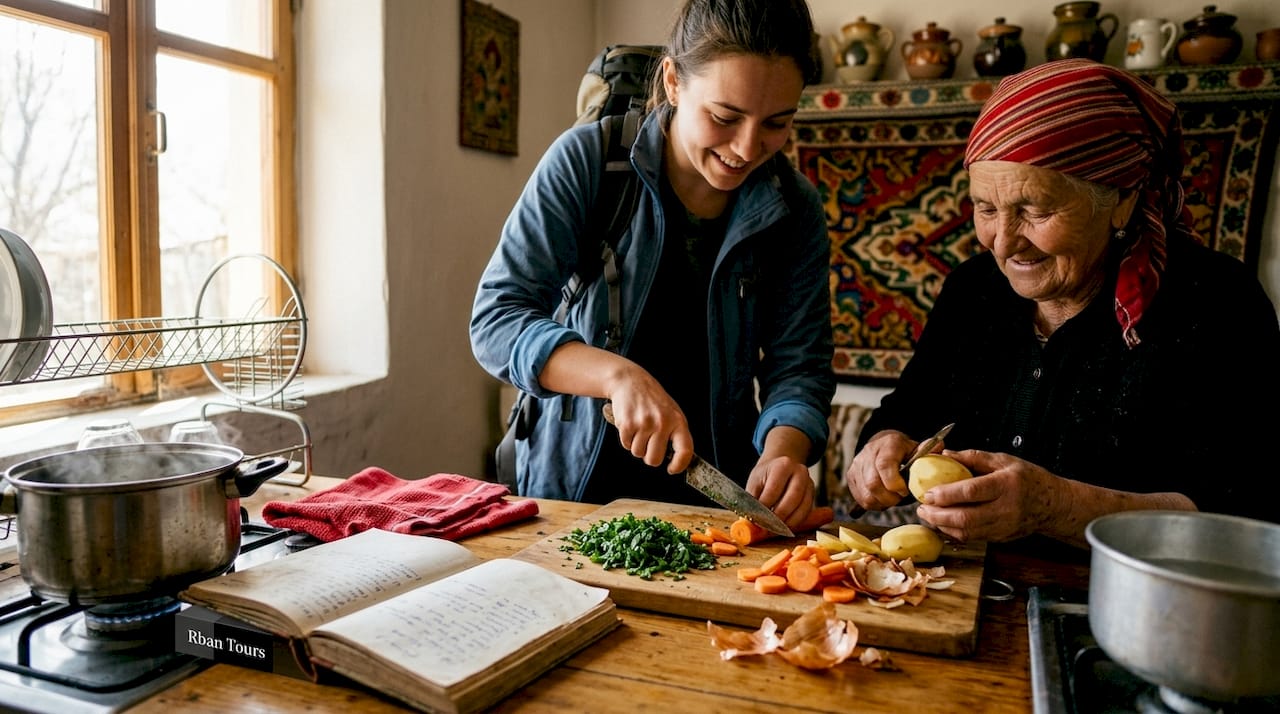
The term gets used loosely, so let’s be specific. A local lifestyle tour is an experience built around cultural immersion and daily life engagement with actual residents, rather than a checklist of famous sights. You’re not observing a city from the outside. You’re stepping inside someone’s morning routine, their kitchen, their creative practice, their neighborhood market.
The features that separate genuine local lifestyle tours from conventional options include:
Local hosts or guides who are actual community members, not hired professionals reciting scripts
Daily life involvement, meaning you participate in activities that locals genuinely do
Consent-based interactions that respect residents’ privacy and cultural boundaries
Meaningful context, where guides explain the why behind traditions, not just the what
Common formats include homestay experiences, traditional cooking classes, artisan craft workshops, volunteering with community projects, and attending local festivals or ceremonies. You might hear these experiences grouped under terms like “local culture tours,” “community lifestyle excursions,” or “community-based tourism.” The labels differ by operator, but the defining features stay consistent.
Lifestyle travel adds another layer worth understanding. It prioritizes experiences aligned with personal passions — culinary exploration, wellness, creative arts — within authentic cultural settings. A local lifestyle tour often sits at the intersection of lifestyle travel and community-based tourism, where personal interests meet real cultural substance.
Community governance and why it matters
Here’s something most travel articles skip entirely: who actually runs the tour shapes everything about its quality and ethics.
Community-based tourism operates through governance structures, often called Destination Management Committees, where local residents collectively make decisions about how visitors interact with their community. This isn’t bureaucratic paperwork. It’s the mechanism that ensures experiences are co-created rather than staged for tourist consumption.
A concrete example worth knowing: the community-based tourism model in Jaflong, Bangladesh created 50 jobs and benefits 1,200 residents through eco-tourism activities managed by a local governance committee. The committee controls which homes host guests, what cultural practices are shared, and how revenue flows back into the community. The result is an experience that feels real because it is real.
Feature | Community-governed tours | Externally operated tours |
Decision-making | Local residents and committees | Outside tour company |
Revenue distribution | Returns to community | Primarily to operator |
Cultural authenticity | Co-created, lived experiences | Often staged for visitors |
Resident consent | Built into the process | Inconsistently applied |
Sustainability | Actively managed | Variable |
When you choose a tour managed or approved by local communities, you’re not just getting a better experience. You’re participating in a model that benefits local residents directly and keeps cultural practices in the hands of the people who own them.
Pro Tip: Before booking, ask the tour operator directly: “How are local community members involved in designing this experience, and how does revenue benefit them?” An operator who can answer this clearly is running something worth your money.
Activities you’ll actually do on these tours
The texture of a local lifestyle tour lives in its activities. These aren’t photo opportunities or demonstrations performed for tourists. They’re participatory experiences that require your hands, your attention, and your curiosity.
Here’s a realistic sequence of what experiences in local communities look like on a well-designed tour:
Cooking with a local chef or home cook. Not a demonstration — you’re at the stove, learning techniques specific to the region, using ingredients from the morning market visit that preceded it.
Attending a neighborhood festival or ceremony. When invited respectfully and with community consent, these moments show you the emotional and spiritual heartbeat of a place in ways no museum exhibit can replicate.
Artisan workshops. Pottery, weaving, printmaking, natural dyeing — crafts tied to local identity. You leave with something made by your own hands and a story attached to it.
Traditional music or dance participation. Not a performance staged for tourists, but a session where you’re taught basic forms alongside community members.
Community project involvement. Some tours incorporate short volunteering components, from garden maintenance to supporting local cooperatives, that directly strengthen the neighborhood economy.
These activities support cultural preservation and local economies in tangible ways. When you pay to learn a weaving technique from an artisan, that income often funds the continuation of that craft. Participation isn’t just personal enrichment. It’s contribution.
Pro Tip: Approach every activity with a beginner’s mindset. The travelers who get the most out of local culture tours are the ones who stop trying to be good at things and start being genuinely curious about them.
How to find and vet a tour worth taking
Not every tour labeled “local” delivers what it promises. The market is full of options that use the language of immersion while delivering something far more surface-level. Knowing how to identify authentic tours protects your time and your money.
When researching what to expect on local tours, here’s what to look for and ask:
Local host involvement. Are guides actual community members, or are they contracted by an outside company that manages the “local” experience from a distance?
Transparent community benefit. Can the operator tell you specifically how revenue reaches residents? Vague answers like “we support the local economy” aren’t enough.
Small group sizes. Authentic community lifestyle excursions rarely accommodate 30 people at once. Smaller groups signal real interaction rather than crowd management.
Preparation materials. Good operators send cultural context, etiquette notes, or reading recommendations before your tour. This tells you they take the experience seriously.
Consent norms. Are there explicit guidelines about photography, entering homes, or participating in ceremonies? This protects residents and signals that the operator thinks about ethics.
Cultural etiquette deserves its own attention. Respectful engagement means dressing appropriately for the context, asking before photographing people, following your guide’s lead in ceremonial spaces, and understanding that some moments aren’t meant to be documented at all. You’re a guest in someone’s daily life. That framing changes everything about how you show up.
Think about exploring cities like a local as a practice, not just a phrase. It requires intention, preparation, and genuine openness to experiences that don’t fit neatly into a caption.
Local lifestyle tours vs. conventional tourism
The difference isn’t just philosophical. It’s practical and measurable.
Conventional tourism organizes travel around landmarks, schedules, and efficiency. You see a lot. You connect with very little. A sightseeing bus delivers visual access to famous places, but the people who live in those places remain invisible. The focus stays on attractions, not communities.
Local lifestyle tours invert that priority. People and culture become the destination. A cobblestone street isn’t interesting because it’s old. It’s interesting because someone’s grandmother has walked it every morning for sixty years to buy bread from the same baker.
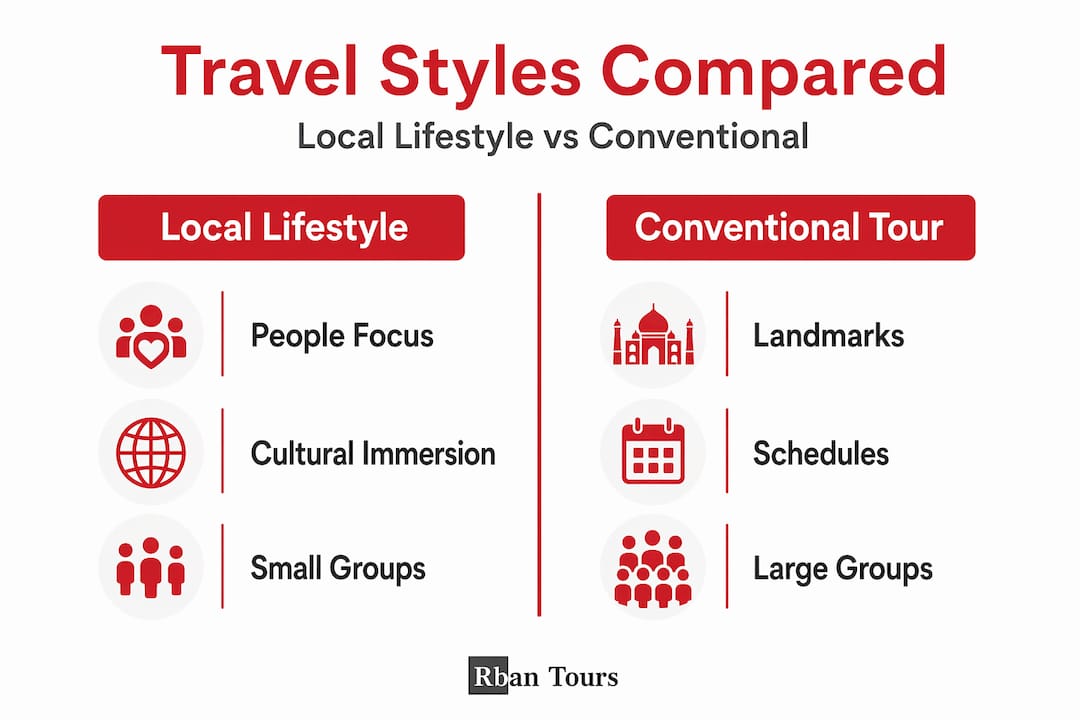
Aspect | Local lifestyle tour | Conventional tour |
Primary focus | People, culture, daily life | Landmarks, attractions |
Traveler role | Active participant | Passive observer |
Community impact | Direct economic benefit | Often indirect or minimal |
Cultural depth | High, context-rich | Surface-level |
Group size | Small, intentional | Often large |
Sustainability | Built into the model | Varies significantly |
The traveler motivations also differ. Sightseeing tours attract those optimizing for coverage — seeing as many places as possible. Local lifestyle tours attract those optimizing for connection — understanding at least one place deeply. Neither is wrong. But if you’ve clicked on this article, you already know which kind of traveler you are.
My honest take on what these tours actually change
I’ve spent years around immersive travel experiences, and what I keep coming back to is this: a local lifestyle tour doesn’t just show you a place differently. It changes the questions you ask when you travel.
After sitting in someone’s kitchen in Mexico City watching them prepare mole from scratch, you stop asking “what should I see?” and start asking “who can I learn from?” That shift is permanent. I’ve seen travelers who arrived skeptical — people who thought community lifestyle excursions were either too niche or too performative — leave with relationships and perspectives that genuinely altered how they see their own lives.
The challenge, and I’ll be direct about this, is that bad versions of these tours exist. I’ve encountered “local experiences” that were essentially rehearsed theater, where residents were paid to act natural while tourists photographed them. That’s not cultural exchange. That’s a zoo with better lighting. The difference is always in the governance and the guide. When the community controls the experience, something real happens.
My advice: prioritize traveling with locals who have genuine stake in the outcome. Their pride in sharing their culture is the clearest signal you’re in the right place. And be willing to be uncomfortable. The moments that feel unfamiliar are usually the ones that stick.
— Rban
Discover local lifestyle tours with Rbantours
Ready to move beyond sightseeing and into the actual pulse of a city?
[
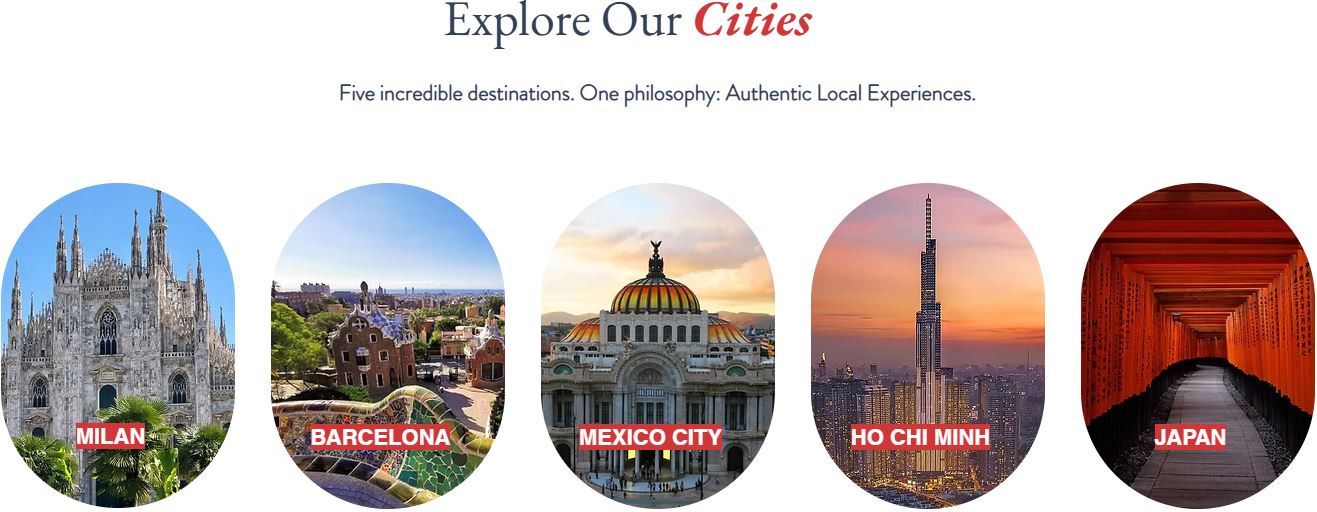
At Rbantours, we design every experience around the question of what it actually feels like to live somewhere, not just visit it. From our walking cultural tours that trace the creative energy of a neighborhood block by block, to hands-on workshops where local artists and chefs become your guides, every detail is built around genuine human connection. We operate across Barcelona, Mexico City, Japan, Vietnam, and Italy, and each experience is curated with local partners who know their city’s soul. Explore our Barcelona experiences or browse our Mexico City tours to find the kind of travel that actually stays with you.
FAQ
What is a local lifestyle tour, exactly?
A local lifestyle tour is an immersive travel experience centered on cultural engagement with actual community members, including activities like cooking classes, artisan workshops, and local festivals, rather than sightseeing at landmarks.
How is a local lifestyle tour different from a regular tour?
Conventional tours focus on landmarks and attractions, while local lifestyle tours prioritize people, culture, and participation in daily life, creating direct connection with the community you’re visiting.
What should I expect on a local lifestyle tour?
Expect hands-on cultural activities such as cooking with residents, attending neighborhood events, or learning traditional crafts, guided by actual community members in small, intentional group settings.
How do I know if a local lifestyle tour is authentic?
Look for tours with local host involvement, transparent community benefit, small group sizes, and clear cultural etiquette guidelines. Operators who can explain how revenue benefits residents directly are a reliable signal of a genuine experience.
Are community lifestyle excursions sustainable?
Yes, when governed by local committees. Community-managed tourism distributes revenue to residents, protects cultural practices, and builds long-term economic value for communities rather than extracting it.
Recommended
Comments