
The Role of Leisure in Travel: Why It Matters
- Rban Tours

- Jul 26
- 7 min read
What leisure in travel actually means — and why it drives the entire industry
Leisure in travel is the deliberate pursuit of relaxation, recreation, cultural engagement, and personal fulfillment during a trip. It is not a secondary feature of tourism. It is the engine. Leisure travel accounts for roughly 65% of total tourism spending in the United States, and globally it generates approximately 80% of all travel and tourism expenditure. That scale reflects something deeper than consumer preference — it reflects a fundamental human need to step outside routine and reconnect with what matters.
The role of leisure in travel spans several distinct dimensions:
Stress relief and psychological recovery — detachment from work and daily pressure
Cultural exchange — authentic encounters with local people, food, and creative life
Social connection — forming and deepening relationships through shared experience
Personal fulfillment — building competence, autonomy, and a sense of aliveness
Life satisfaction — measurable improvements in overall well-being that persist after the trip ends
Leisure travel spending is projected to triple to $15 trillion by 2040, driven primarily by domestic trips and travelers from emerging markets. That trajectory tells you everything about where human priorities are heading.
Table of Contents
How leisure travel supports your mental health and well-being
The psychological case for leisure travel is grounded in two well-established frameworks: effect-recovery theory and conservation of resources theory. Both suggest that a leisure trip creates the conditions for genuine recovery — relaxation, detachment from work, mastery experience, and a restored sense of personal control. Research confirms that all four of these recovery dimensions positively affect life satisfaction after the trip. Even a weekend getaway produces measurable results.

Long-distance travel carries its own distinct benefits. A study using nationally representative data from the Health and Retirement Study found that long-distance travel is associated with higher cognitive function, fewer depressive symptoms, and lower levels of loneliness compared to non-travelers. The cognitive and physical engagement required by unfamiliar destinations appears to be part of what makes travel therapeutically powerful.
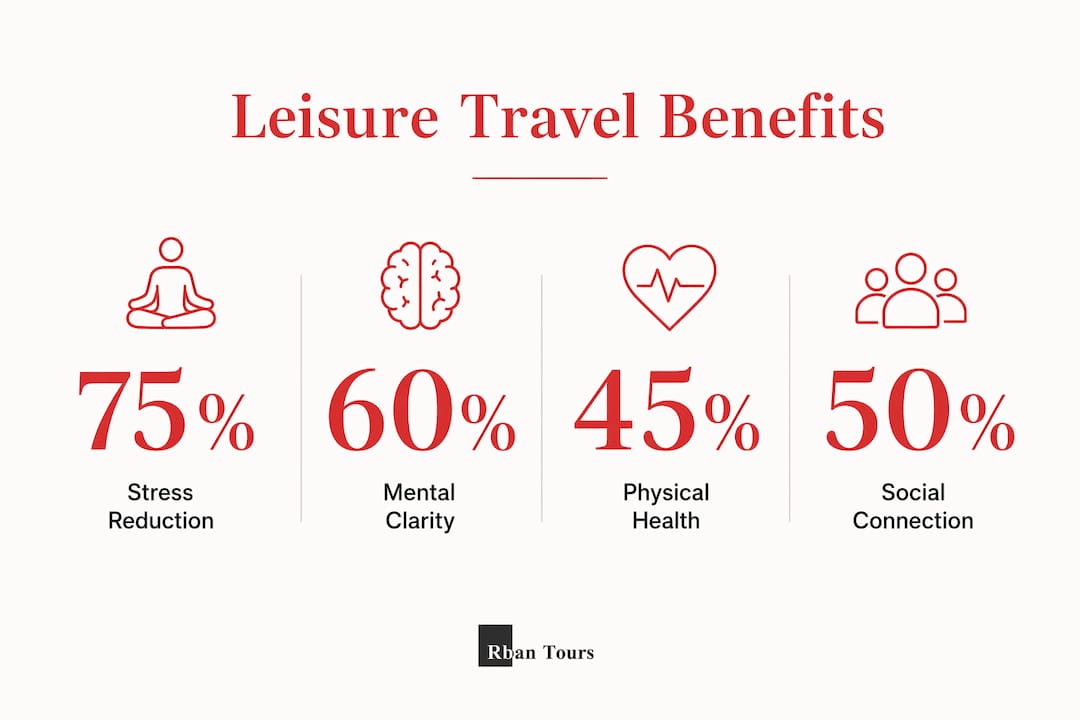
Fulfillment of psychological needs — autonomy, relatedness, and competence — during travel also predicts revisit intentions and positive word-of-mouth. Travelers who feel genuinely free, connected, and capable during a trip don’t just feel better. They come back.
Key mental health benefits linked to leisure travel include:
Reduced depressive symptoms, particularly with long-distance trips
Improved cognitive function and mental sharpness
Lower loneliness scores even from short local trips
Restored sense of personal control and mastery
Lasting gains in life satisfaction measurable after returning home
How leisure travel preferences are shifting right now
The traveler of 2026 is not the traveler of 2015. Preferences have moved decisively away from passive sightseeing toward experiences that feel personally meaningful. Cultural immersion, wellness retreats, creative workshops, and gastronomy-led exploration have replaced the checklist approach to landmarks.
Several patterns define the current moment:
Domestic and short trips are surging. BCG’s analysis projects domestic trips as the primary growth driver toward the $15 trillion milestone.
“Bleisure” travel is mainstream. In emerging markets, combined business and leisure trips exceed 70% of all trips taken.
Affluent travelers are going shorter but not cheaper. High-income US leisure travelers are trending toward shorter, more conservative itineraries while still prioritizing luxury accommodations and premium convenience.
Solo travel has gone mainstream, especially among younger demographics seeking autonomy and self-discovery.
AI and digital tools are reshaping trip planning, yet travelers increasingly crave the human interactions and local texture that no algorithm can replicate.
The shift is not just behavioral. It reflects a deeper recalibration of what travel is for. Travelers want to feel something real.
Why personalization, social connection, and flexibility define great leisure travel
Personalization is not a luxury add-on. When a trip aligns with your values, creative interests, and pace of life, it fulfills psychological needs at a deeper level. The emotional return on investment — how travel makes you feel autonomous, connected, and capable — shapes satisfaction and loyalty far more than the destination’s star rating.
Social connection amplifies every experience. Shared moments with locals, fellow travelers, or creative collaborators create the kind of memory that outlasts any photograph. Authentic local venues are where that connection happens most naturally — a neighborhood workshop, a street food market, a creative space that carries the real pulse of a city.
Flexibility matters because modern life is unpredictable. Travelers want experiences that adapt to their energy, schedule, and curiosity rather than locking them into rigid itineraries. Flexible tour formats have become one of the clearest differentiators between experiences people remember and ones they forget.
Strategies for building personalization, connection, and flexibility into your travel planning:
Choose activities tied to your genuine interests — art, food, design, movement — not generic “must-sees”
Book experiences led by local creatives or guides who live the culture, not just describe it
Leave unscheduled time in every itinerary for spontaneous discovery
Prioritize small-group or workshop-style formats that create real social interaction
Use design-led travel experiences to align your trip with your personal aesthetic and identity
Pro Tip: Before booking, ask yourself which psychological need you most want to meet — autonomy, connection, or mastery. Then choose activities that directly serve that need. A Paint & Sip workshop feeds creativity and social connection. A solo walking tour through a neighborhood market feeds autonomy and cultural competence. The match matters.
How to get the most out of your leisure travel experiences
The biggest mistake travelers make is treating leisure as what happens between the “real” parts of a trip. Leisure is the real part. Here is how to protect and maximize it:
Plan frequent short breaks rather than saving everything for one annual trip. Short domestic getaways deliver faster psychological recovery and are easier to actually take.
Choose immersive over passive. A cooking class in a local home, a vintage market tour, or a creative workshop engages you cognitively and socially in ways that a museum walkthrough rarely does.
Build in unstructured time. Some of the most meaningful travel moments are unplanned. Protect space for them.
Align activities with psychological needs. Research on travel behavior shows that perceived constraints — time, cost, employer culture — are among the strongest barriers to vacation use. Recognizing them is the first step to pushing past them.
Pro Tip: Travel psychology research suggests that the anticipation of a trip produces its own well-being boost. Book something specific — even a weekend experience — and let the planning itself become part of the benefit.
What gets in the way of leisure travel
Barriers to leisure travel are real, and they are worth naming directly. Perceived travel constraints — including time pressure, financial concerns, work culture, and caregiving responsibilities — significantly reduce travel behavior even among people who genuinely want to travel. Employers who actively encourage vacation use and industries that make travel accessible play a measurable role in unlocking these benefits for more people.
Cost remains the most cited barrier, particularly for lower-income households. Social isolation and lack of a travel companion deter solo travelers, especially older adults. Health concerns and accessibility needs create additional friction. None of these barriers are trivial, and acknowledging them honestly is part of making leisure travel more equitable and inclusive.
Traveling with intention — sustainable and responsible leisure
Sustainable leisure travel is not about sacrificing experience. It is about choosing experiences that respect the places and people that make them possible. Travelers who engage with local creatives, eat at neighborhood restaurants, and book with community-rooted operators contribute directly to the economic health of the destinations they love. That social connection in travel is also what makes the experience richer for the traveler.
Practical responsible travel habits include traveling slower and staying longer in fewer places, choosing locally owned accommodations and guides, offsetting carbon where possible, and being genuinely curious rather than extractive in cultural encounters. The soul of a destination reveals itself to travelers who show up with respect.
Rbantours brings the best of leisure travel to life
If this article has clarified what you are actually looking for in travel — real connection, creative energy, cultural depth, and the freedom to experience a city on your own terms — Rbantours was built for exactly that.
[
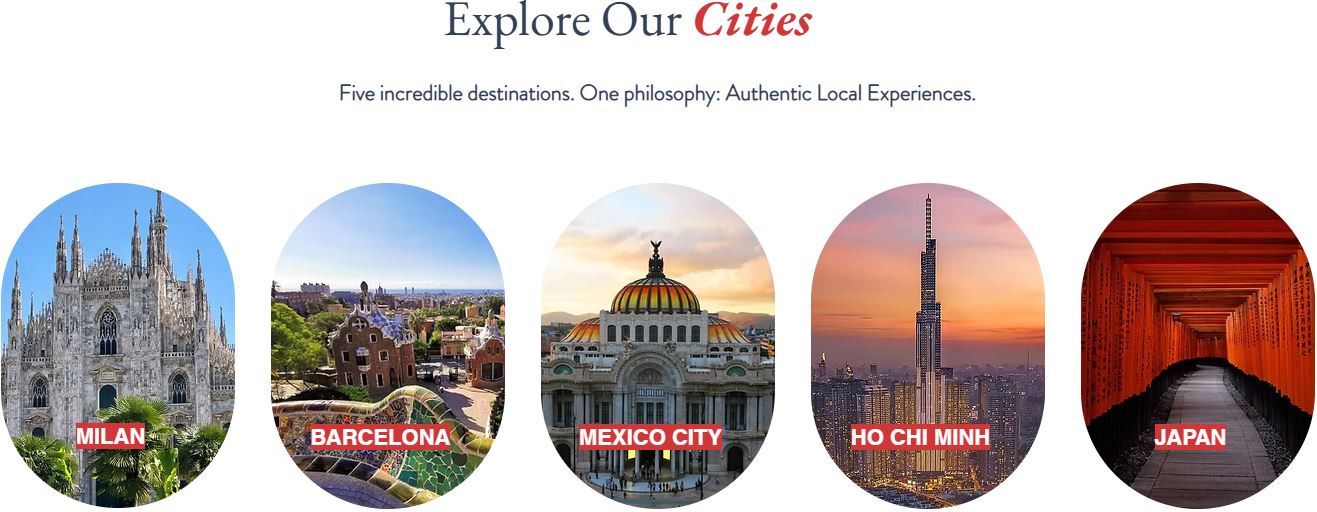
We design curated, lifestyle-driven experiences across Barcelona, Mexico City, Italy, Vietnam, and Japan that go well beyond traditional tourism. From Barcelona experiences rooted in local creative culture to immersive walking and cultural tours that let you feel a city’s rhythm from the inside, every Rbantours experience is built around the psychological and social benefits that make leisure travel genuinely restorative. Browse our offerings and book the experience that fits where you are and what you need right now.
Key Takeaways
Leisure travel delivers its deepest benefits when experiences are personalized, socially connected, and aligned with genuine psychological needs — not just destinations checked off a list.
Point | Details |
Leisure dominates tourism spending | Leisure travel constitutes the majority of US tourism spending and approximately 80% globally. |
Mental health benefits are measurable | Long-distance travel is linked to higher cognitive function and fewer depressive symptoms. |
Spending is set to surge | Global leisure travel spending is projected to triple to $15 trillion by 2040. |
Psychological needs drive satisfaction | Fulfilling autonomy, relatedness, and competence during travel predicts revisit intentions and loyalty. |
Rbantours delivers this in practice | Curated, design-led experiences in Barcelona, Mexico City, and beyond are built around authentic connection and personal fulfillment. |
Recommended
Comments