
Why small group tours unlock deeper travel connections

Most people assume that traveling with a group means sacrificing freedom, settling for generic itineraries, and moving at the pace of the slowest person in line. That assumption is worth questioning. Small-group tours are more intimate and flexible, enabling access to unique places and experiences that large buses simply cannot reach. The real question isn’t whether group travel works. It’s whether the right kind of group travel can actually transform how deeply you experience a destination. This guide breaks down everything you need to know.
Table of Contents
Key Takeaways
Point | Details |
True small groups matter | Tours with 8–16 people offer the most intimacy and unique access. |
Cultural immersion advantage | More guide attention means deeper local experiences and new friendships. |
Flexible pace and safety | Small groups let you explore at a relaxed pace with added support and security. |
Not for everyone | Those who value full independence or ultra-budget travel may find small group tours less ideal. |
What defines a small group tour?
To understand the benefits, it’s crucial first to know what small group tours truly are and how they differ from both large tours and independent travel.
The phrase “small group tour” gets used loosely in the travel industry, and that’s a problem worth knowing about before you book anything. Definitions and real group sizes vary — some operators use “small” for up to 24 travelers, sometimes losing the intimacy that genuinely smaller groups offer. So when you see that label, always dig deeper.
In practice, typical group sizes for adventure operators range from 8 to 16, a sweet spot that allows both independence and the support of a knowledgeable guide. Below eight, you’re essentially on a private tour. Above sixteen, the experience starts to shift toward something more logistically managed than culturally immersive.
Understanding why travelers choose small group tours often starts with recognizing this spectrum. The structure of a small group tour also matters. Unlike independent travel, there’s a guide, a loose itinerary, and a built-in social fabric. Unlike large tours, there’s room to breathe, ask questions, and occasionally go off-script.
Feature | Micro group (2-7) | Small group (8-16) | Mid-size (17-24) |
Guide attention | Very high | High | Moderate |
Access to exclusive venues | Excellent | Very good | Limited |
Social energy | Intimate | Balanced | Lively |
Logistical flexibility | Maximum | High | Moderate |
Typical cost per person | Highest | Moderate to high | Lower |
Ideal for | Private travel | Cultural immersion | Social travelers |
Reading a table like this makes something clear: the 8 to 16 range hits a genuine sweet spot. You get meaningful guide access, enough social energy to spark real conversations, and the logistical agility to make spontaneous stops at a hidden trattoria or a tucked-away neighborhood studio.
Key benefits of choosing small group tours
With the basics defined, it’s now possible to pinpoint the proven benefits that set small group tours apart from both large-group and independent options.
More meaningful time with your guide. Small groups mean more one-to-one guide time, local interaction, and sometimes special access to venues that larger groups could never enter. A guide leading eight people can pause, read the room, and pivot the story based on what the group genuinely wants to explore. That kind of responsiveness just doesn’t happen at scale.
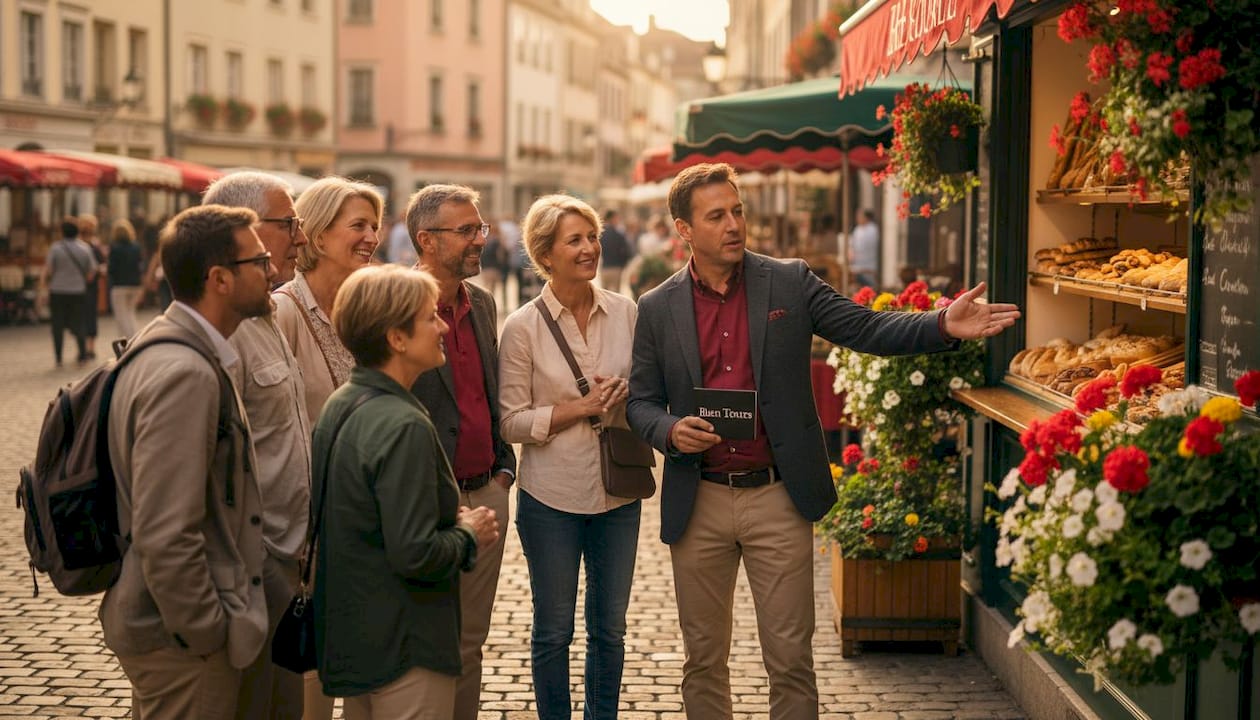
Genuine flexibility in pace. With fewer people, the whole group moves faster and waits less. That might sound minor until you’ve spent forty minutes watching forty tourists shuffle through a doorway one by one. Small groups slip into spaces. They get the quiet corner table, the after-hours studio visit, the local market stall before the crowds arrive.
A sense of safety and social ease. This matters especially for solo travelers. Travelers consistently value the sense of safety group tours provide, and major operators have expanded their small group offerings in direct response to growing demand. Arriving in an unfamiliar city alone is exhilarating. But having a trusted guide and a small circle of fellow travelers gives you a base from which to take risks and explore confidently.
The kind of community atmosphere that emerges in small group settings is something you simply can’t manufacture. It happens organically, over a shared meal or a spontaneous detour that only your group experienced.
Here’s what the best small group tours consistently deliver:
Curated access to local makers, artists, and neighborhood experts
Meals in family-run spots that don’t appear in any mainstream travel guide
Conversations with guides that go beyond facts and into lived cultural experience
Flexibility to say yes to the unexpected without derailing the whole day
A natural social rhythm where connections form without forced icebreakers
“The most memorable travel moments rarely come from what was planned. They come from what the small group made possible — a detour down an unmarked alley, a spontaneous invitation from a local, a conversation that lasted three hours over coffee.”
Pro Tip: Before booking, ask the operator directly: what is the maximum number of travelers in this specific tour? Also ask whether the experience includes any exclusive or after-hours access to venues. Those two questions alone will tell you a lot about what kind of experience you’re actually signing up for.
The best meaningful local interactions happen when there’s space for them. And small groups, by design, create that space. Whether you’re exploring Mexico City’s creative neighborhoods or navigating the backstreets of Barcelona, personalized, immersive journeys only happen when the format supports genuine human connection.
If you’re drawn to this kind of travel, Barcelona small group experiences are a great example of what thoughtful curation looks like in practice.
Small group tours vs. large group tours: A practical comparison
Knowing the benefits is vital, but comparing head-to-head with large groups reveals exactly where small groups truly excel and when they may not.
Small groups deliver more personalized attention, flexible pace, and a relaxed social feel but may cost more than large groups. That trade-off is real and worth weighing honestly. Here’s a direct comparison:
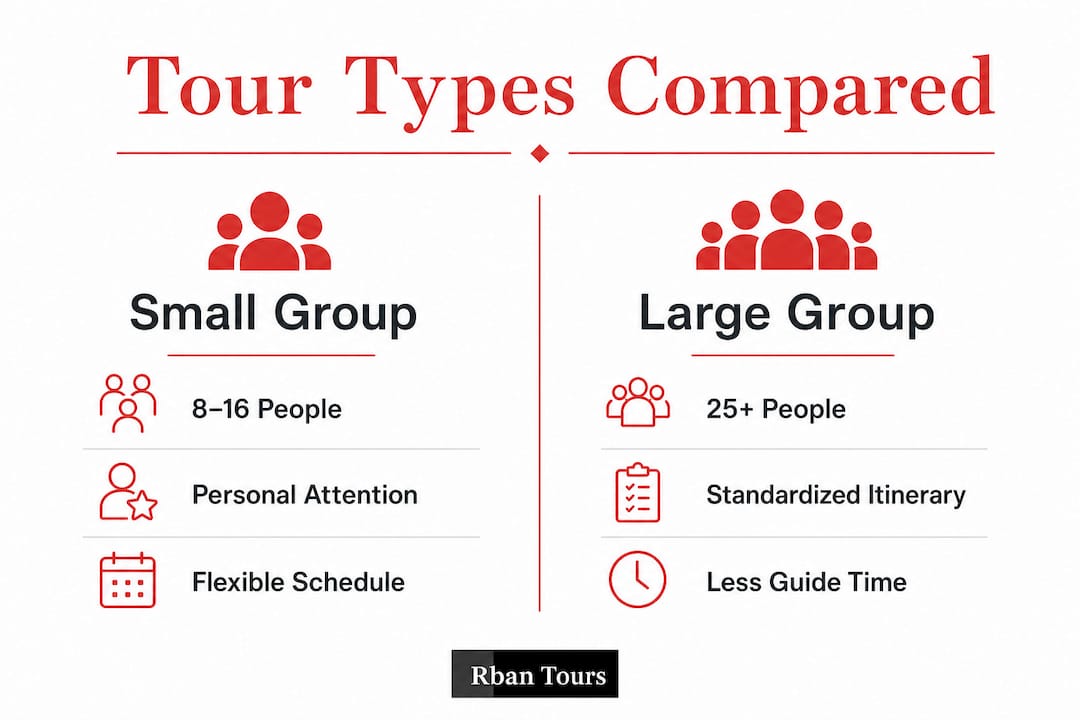
Category | Small group tour | Large group tour |
Group size | 8-16 | 25-50+ |
Guide attention | High, personal | Shared, broadcast-style |
Pace | Flexible, responsive | Fixed, regimented |
Access | Hidden gems, small venues | Major attractions, wide spaces |
Cost per person | Higher | Lower |
Social experience | Intimate, organic | Energetic, less personal |
Spontaneous detours | Common | Rare |
When large group tours shine:
Budget travel — The cost per person is lower, which matters when you’re covering a lot of ground across multiple destinations.
High-energy social scenes — Traveling with fifty people can generate a party-like atmosphere that genuinely suits some travelers.
Well-known landmark visits — If the goal is to check major attractions off a list, large groups are efficient.
Family reunions or corporate trips — Larger formats work well when the social group itself is the point.
When small group tours shine:
Cultural depth is the goal — You want to actually understand a place, not just photograph it.
Solo travel with built-in community — Connection matters, but so does the quality of that connection.
Destinations with intimate venues — Small trattorias, artisan workshops, local galleries: these spaces reward small groups.
Travelers who hate waiting — Every minute matters when you’re exploring a city’s rhythm.
Group travel can cost more with less free time if the itinerary is packed and inflexible, so the format you choose should genuinely reflect how you want to spend your energy and your budget. Understanding the insider secrets of memorable tours often means recognizing that the format shapes the experience just as much as the destination itself.
Pro Tip: Always read the fine print. “Small group” in a brochure and “small group” in reality can mean very different things. Look for the actual maximum participant count, not a marketing phrase.
When are small group tours the best fit?
Armed with insights and comparisons, the next step is to find out if a small group tour aligns with your personal travel style and priorities.
Small group travel delivers the most when cultural immersion, flexible pace, and genuine human connection are what you’re after. If you want to feel the heartbeat of a city rather than observe it through a bus window, a small group gives you the access and intimacy to do exactly that.
But the format isn’t perfect for everyone. Not all “small group” tours guarantee intimacy: operational details and individual preferences matter, and real trade-offs like higher cost and less free time do exist. Knowing this before you book saves genuine disappointment.
Ask yourself these questions before committing:
Do I want structure with flexibility, or total freedom?
Am I comfortable sharing decisions with a small group of strangers?
Is cultural depth more important to me than visiting the maximum number of sites?
Do I have a realistic budget for a higher-quality, more curated experience?
Am I open to the social energy of a shared journey?
“The best small group experience I ever had felt nothing like a tour. It felt like traveling with people who happened to share my curiosity about the world.”
Introverts or those who prefer unstructured travel may find even small groups exhausting or inflexible. That’s an honest truth worth sitting with. If your ideal travel day involves waking up with zero plan and following wherever your instincts lead, a group format, however intimate, may not be your best match. Some operators do blend group structure and independent exploration, giving travelers the best of both worlds, so it’s worth exploring that option if you’re on the fence.
Who genuinely thrives in small group tours:
Solo travelers seeking connection without sacrificing depth
Culture-focused travelers who want local knowledge, not just local landmarks
Curious travelers who appreciate spontaneous moments and real conversations
Anyone who has felt anonymous and disconnected on a large tour and wants something better
These experiences create deeper travel memories precisely because they’re built around human connection, not passenger throughput.
Our take: The real magic of small group tours
We’ve designed and led enough experiences to say this clearly: the label “small group” means almost nothing on its own. What matters is the curation behind it.
A group of twelve strangers can feel just as disconnected as a crowd of fifty if the guide is disengaged, the itinerary is rushed, and the venues are chosen for convenience rather than character. Genuine group size and thoughtful curation matter far more than the marketing description. We’ve seen it play out enough times to know that the chemistry of a group, guided well, is the actual product.
The most unexpected reward of small group travel isn’t the exclusive access or the flexible pace, although those are real. It’s the serendipitous human connections that emerge when the setting is right. A shared laugh at a market stall in Vietnam. A spontaneous detour through a neighborhood no one had planned to visit, sparked by a question from a fellow traveler. These moments don’t happen by accident. They happen because the format created enough space for them.
What most people miss when evaluating tours is the role of the guide. In a large group, a guide is a broadcaster. In a small group, a guide is a collaborator. The best guides we work with don’t just share information; they read the energy of the group and shape the experience in real time. That’s a skill that only scales downward, not up.
The tough truth: no format is universally right. But when the group size is genuine, the curation is intentional, and the guide is exceptional, small group travel stops being a “tour” and starts being something closer to a personalized immersive journey that stays with you long after you’ve returned home. We believe travel at its best is a conversation between you, a place, and the people who help you hear what it’s saying.
Ready for your next unforgettable journey?
We’ve spent years curating small group experiences that embody exactly what this article describes: real access, thoughtful guides, intimate settings, and the kind of cultural connection that turns a trip into a memory you actually carry with you.
[
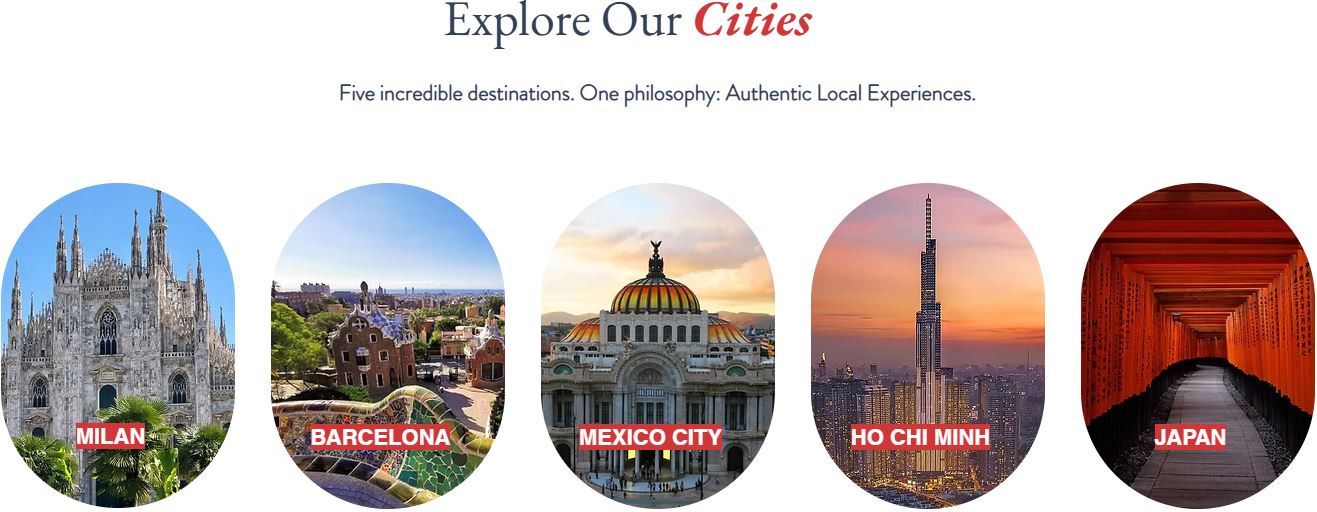
If the idea of traveling with a perfectly sized group of curious, like-minded people speaks to you, we’d love to show you what that looks like in practice. Explore our Barcelona small group tours for sun-drenched culture and creative energy, or discover our Japan small group adventures for some of the most immersive, thoughtfully designed experiences we offer. Ready to browse everything we have? Find all small group tours across our full range of destinations and start building a journey that actually means something.
Frequently asked questions
What size is considered a small group tour?
Most small group tours include 8 to 16 travelers, though some operators use the label for up to 24, which can affect intimacy and access to exclusive venues.
Are small group tours more expensive than large group tours?
Small group tours typically cost more, but group travel can cost more with less free time if the itinerary is tight, so the value comes from higher guide attention, curated access, and a more personal pace.
Do small group tours offer free time and flexibility?
Some small group tours include free time and optional activities, but it varies by operator, so operational details matter and you should always review the full itinerary before booking.
Are small group tours good for solo travelers?
Absolutely. Travelers value the safety and social ease that small group travel provides, making it one of the best formats for solo adventurers who want community without sacrificing quality.
Who is not a good fit for small group tours?
Those who prefer unstructured travel or need total independence may find even intimate group formats too structured, making solo or self-guided travel a better match for their style.
Recommended
Comments